Svinaře Castle, Baroque château in Svinaře, Beroun District, Czech Republic
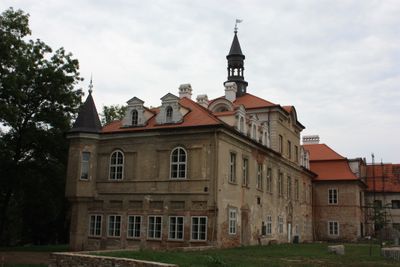
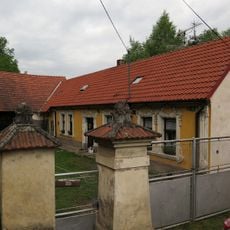
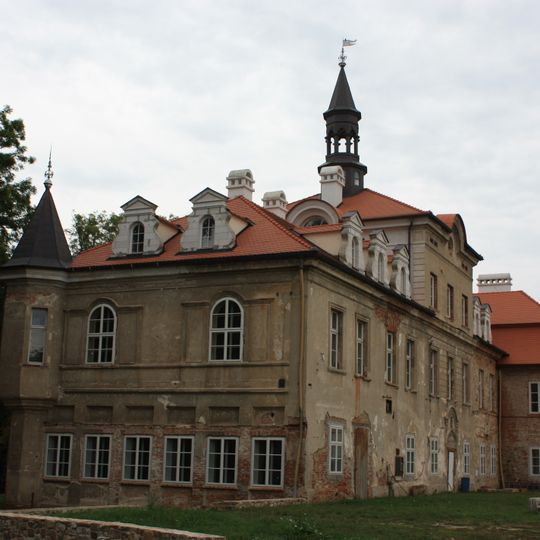
Svinaře Castle is a Baroque building from the second half of the 18th century, built in 1766 by Antonín Maschek of Maasburg. It is a two-storey house with a central risalit, topped by a polygonal turret with a weathervane inscribed "AMV 1766". Late 19th-century owners extended it southward and added a service building to the north; the southwest corner has a bay window with a weathervane reading "BvE 1890". The entrance from the rectangular courtyard is crowned by the Maschek coat of arms, and two arcade arches lead into the north building from the park.
A manor fortress stood on the site perhaps as early as the 14th century, owned by the lords of Svinaře and abandoned in the 16th century. Antonín Maschek z Maasburgu built the Baroque château in 1766 together with its park; his family held Svinaře until 1815. From 1863 to 1900 the estate belonged to the Bachofens of Echt, who enlarged the building, and after 1900 to the sugar industrialist Max Kahler, ennobled in 1911. The Jewish Kahler family fled the Nazis and the château passed to the state in 1945.
From 2004 to 2013 the park hosted Svinařské řetězení, a June gathering of blacksmiths and related crafts, later moved to nearby Liteň as "Kováři v Litni". A gallery in the former granary opened in summer 2018 with an exhibition on a Celtic wedding, marked on 4 August 2018 by a Lughnasadh celebration. The castle now hosts weddings and company events.
The castle stands in the village of Svinaře in the Beroun district, entered from the rectangular farmyard ringed by outbuildings; a second farmyard adjoins it to the east. The grounds have been under reconstruction since 2003, so parts of the buildings and park may be closed off. A bistro and café operate on site, and the castle can be hired for weddings and company events.
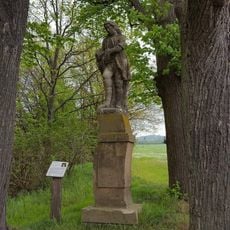
The weathervane atop the roof carries the inscription "AMV 1766", marking the year Antonín Maschek von Maasburg built the castle; a second vane on the southwest bay reads "BvE 1890". Near the entrance stands a Baroque statue of St John of Nepomuk, now a copy of the original by sculptor Václav Prachner.
The community of curious travelers
AroundUs brings together thousands of curated places, local tips, and hidden gems, enriched daily by 94,091 contributors worldwide.