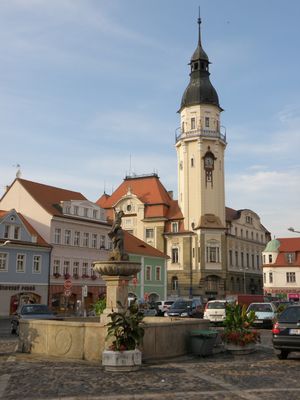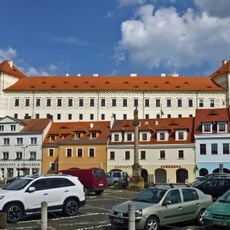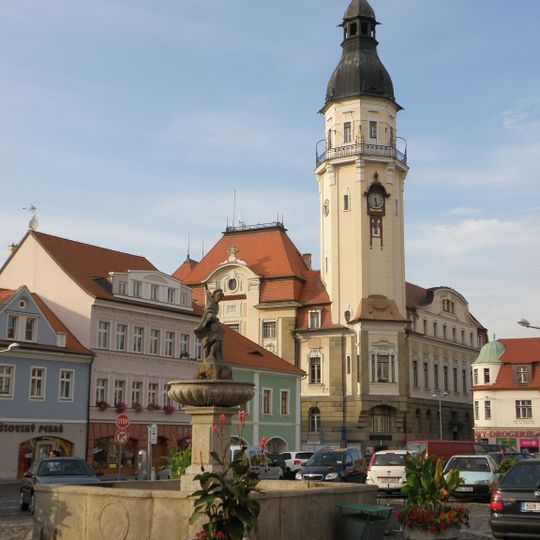
Town hall, Art Nouveau town hall in Bílina, Czech Republic
The Bílina town hall is a municipal building in Art Nouveau style with reform architectural features dating from the early 1900s. Its symmetrical facade displays flowing lines and natural motifs that characterize the period.
Mayor Josef Schmettan proposed a new town hall in 1905 at the corner of today's Želivského and Břežánská streets, commissioning Vienna architect Franz Neumann. After Neumann died, Friedrich Kick of the German Technical University in Prague modernised the plans. The foundation stone was laid on 2 December 1908, and the first council meeting was held on 18 August 1911.
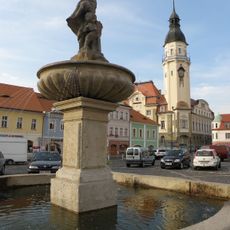
The tower clock faces the square, the bridge over the Bílina and the chateau, and the wedding hall with its gallery, stucco and reliefs occupies two storeys. Twenty wall lights and copper Art Nouveau chandeliers hang there, and the chandelier in the mayor's office is 163 cm tall.
The building sits centrally on Bílina's town square and is easily reached on foot. Visitors can view and photograph the exterior and architectural details from the street at any time.
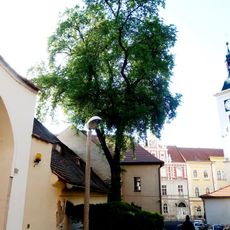
The tower's copper-clad onion dome rises to 63 metres, with a viewing gallery at 37 metres. The tower was deliberately set as a vertical counterpoint to the low, horizontally laid-out château nearby.
The community of curious travelers
AroundUs brings together thousands of curated places, local tips, and hidden gems, enriched daily by 94,027 contributors worldwide.