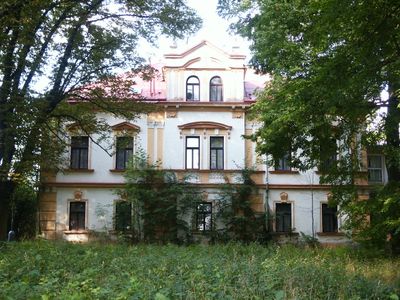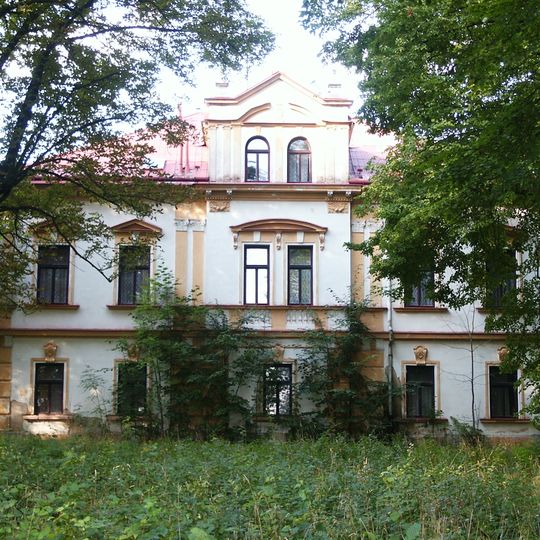
Studenec Castle, Renaissance Revival castle in Studenec, Czech Republic.
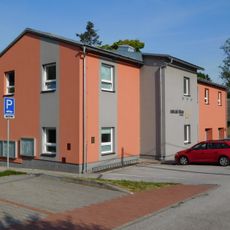
Studenec Castle is a two-winged, three-storey château in Studenec built in the Neo-Renaissance style. Its southwest wing was added in 1883, and the interior holds 28 rooms with sanitary facilities, a dining hall, a large common room, a pool, saunas and a bar. A castle park with two two-storey recreational cottages lies southeast of the building.
A Renaissance fortress was built at Studenec around 1500, first documented in 1623 when Jan Stráník the Younger lost it after the Bohemian Revolt. Albrecht von Wallenstein bought it and passed it to Johana Uršula Grodecká in 1630; from 1641 it served as an administrator's residence. In 1883 Karel Berger z Bergentalu rebuilt and expanded it in Neo-Renaissance style, adding a southwest wing.
The name Studenec comes from the cold stream that runs through the village, and the château has stood at its centre since the 16th century. From 1641 it lost its manorial status and became the administrator's residence, later offices and flats for estate officials. Today the empty building and its park with two two-storey holiday cottages are what remains for visitors to see.
The château stands in the village of Studenec in the Jilemnice area, with a castle park and two two-storey recreational cottages to its southeast. The building has been abandoned since the early 21st century and is decaying, so entry is not safe; the exterior and park can be viewed from the public paths.
The southwest wing added in 1883 is the pseudorenaissance part; the core is an older fortress rebuilt in 1883. In the mid-1970s the Chemical Works Litvínov converted the building into a recreation centre, adding a pool, saunas and a bar, and 28 rooms with bathrooms remain inside.
The community of curious travelers
AroundUs brings together thousands of curated places, local tips, and hidden gems, enriched daily by 92,653 contributors worldwide.