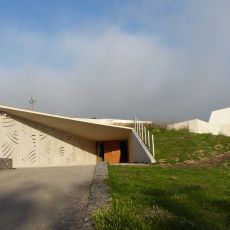
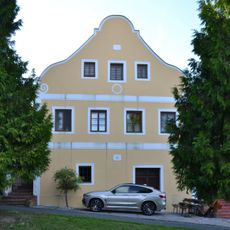
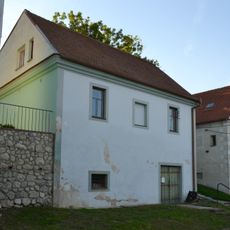
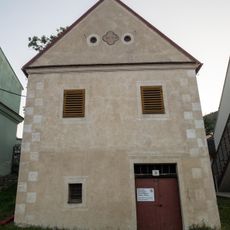
Archaeological site Pavlov I, Archaeological site in Pavlov, Czech Republic
Pavlov I is an open-air Upper Palaeolithic site on the northeastern slopes of the Pavlov Hills, about 35 m above the Thaya river. It measures roughly 80 by 40 m, with an oval area of some 2,000 m². Thirteen round tent-like dwellings about 4 m across, built from wood, large bones and mammoth tusks, stood in two main zones. Cultural layers up to 60 cm thick were sealed by up to 4 m of loess.
Excavations began after World War II and revealed multiple dwelling surfaces from the Stone Age with carefully arranged objects. The finds show that people here practiced a more complex way of living with organized living spaces.
Henri Delporte proposed the name Pavlovien in 1958 after visiting the excavation, for a culture matching the Western European Gravettian and found in Moravia, Lower Austria and Slovakia. The site also yielded the oldest evidence of ceramic production and of cords and knots, alongside figurative and decorative ivory carvings.
Visitors can explore the site through walking trails across the surrounding Pavlov Hills and get information from guided tours at the location. Wear sturdy shoes and allow time to see the different areas of the excavation.
Pavlov I yielded the oldest known evidence of ceramic production, along with the earliest traces of making cords and knots. Excavations between 1954 and 1964 alone recovered about 210,000 stone artefacts, and Bohuslav Klíma recorded most tools and cores in an inventory known as the "Black Book".
The community of curious travelers
AroundUs brings together thousands of curated places, local tips, and hidden gems, enriched daily by 92,862 contributors worldwide.