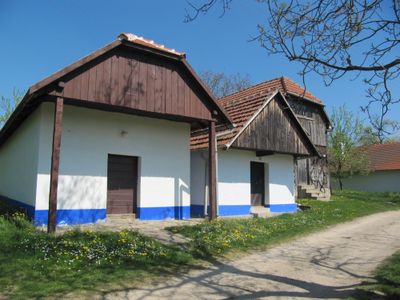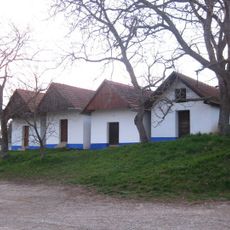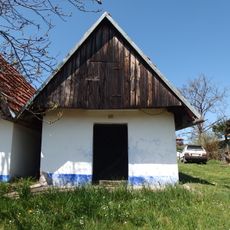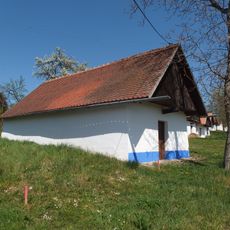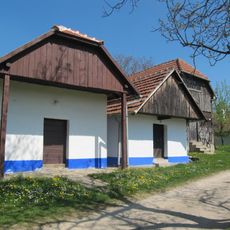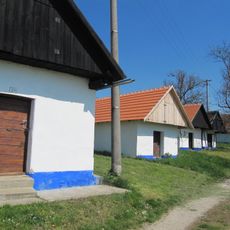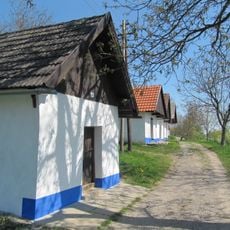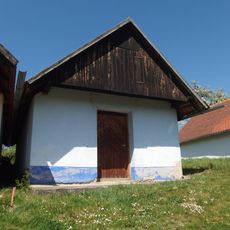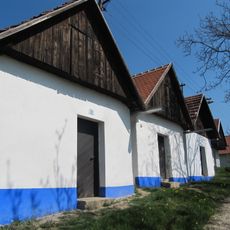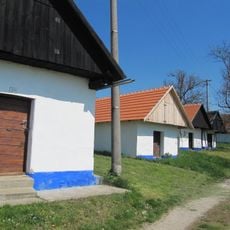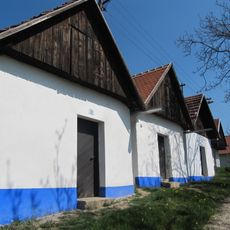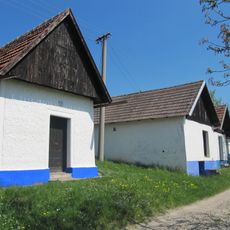
Vlčnovské búdy, Village heritage site in Vlčnov, Czech Republic
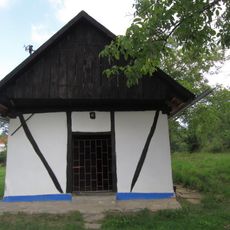
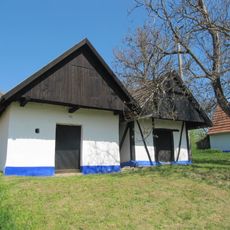
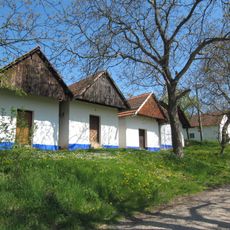
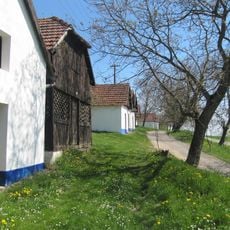
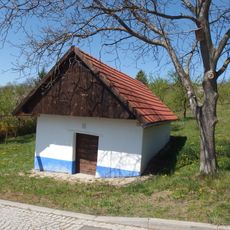
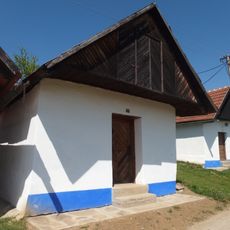
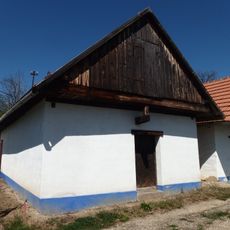
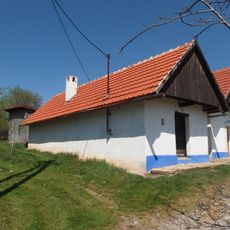
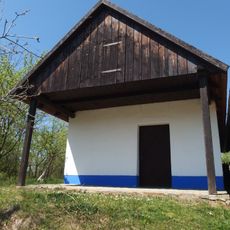
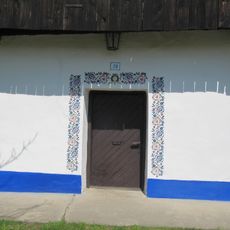
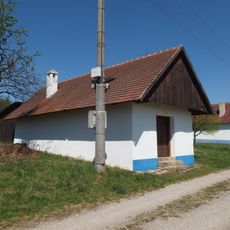
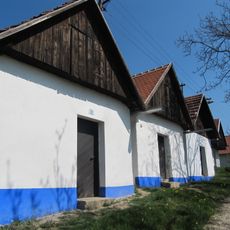
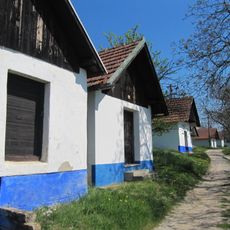
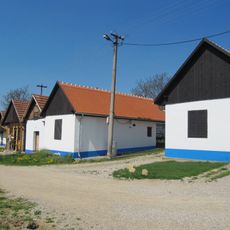
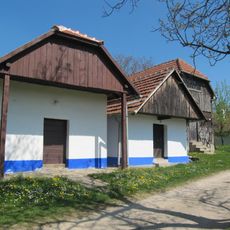
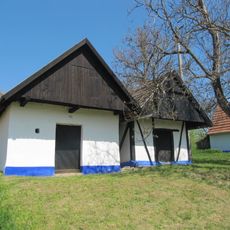
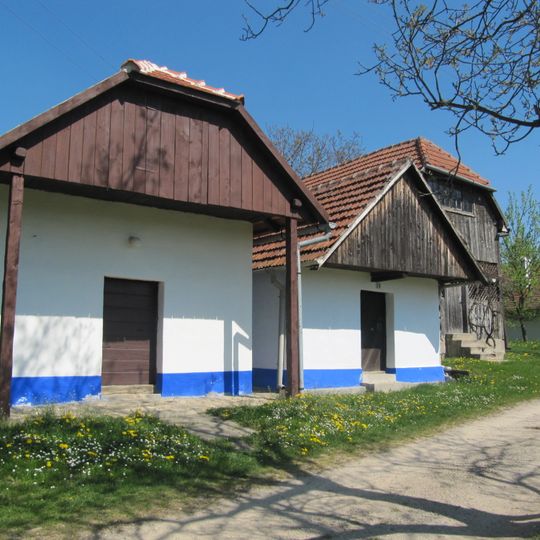
Vlčnovské búdy is a complex of thirty-five above-ground winegrowing buildings north of Vlčnov, the largest such collection in the Czech Republic. Thirty of them are protected as cultural monuments. The oldest are built of rammed clay, the newest of fired and unfired bricks. Each has a larger front room for pressing and a smaller rear room for storing wine.
The first written record of the wine buildings dates from 1544. The earliest structures were gradually replaced by rammed-earth "tlučenice", and from the 19th century a third type was built. The site was declared a village heritage reserve in 1995.
Locals call these buildings búdy rather than sklepy because they stand above ground, not dug into it. The name reflects their function as above-ground wine lodges. The front room served as a press room and the rear room stored wine, a layout still visible in the oldest structures.
The búdy stand on the open slope of Kojiny north of Vlčnov, reached on foot along field paths from the village; there is no visitor centre or fixed opening times. The thirty protected structures are privately owned wine buildings, so view them from the paths and do not enter without an owner's consent.
The reserve holds thirty-five above-ground winegrowers' buildings called búdy, the largest such complex in the Czech Republic; thirty of them are individually protected. Because they stand above ground rather than being dug into a slope, locals never called them cellars (sklep) but búdy. The oldest were built of rammed clay, the newest of fired and unfired bricks.
The community of curious travelers
AroundUs brings together thousands of curated places, local tips, and hidden gems, enriched daily by 93,980 contributors worldwide.