Katův dům, A house in Kadaň
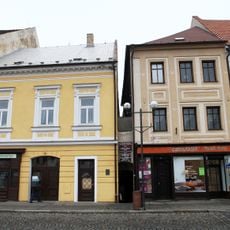
Katův dům stands on the town rampart at Katova ulička 190, on the site of a polygonal defensive bastion of the 15th-century third ring of Kadaň's walls. The bastion is documented in 1475 as a municipal servant's dwelling and was sold to burgher Hans Klautsch in 1493. A sandstone sculpture of the Crucified Christ, titled Torzo and made by Bořivoj Vítkovič in 2000, is mounted on the facade.
The building arose in the 15th century on the site of a defensive bastion and formed part of the city's protection system. In the 18th century, Ignác Kayl, the last executioner of Kadaň, lived here and was known as a healer and surgeon as well.
The house takes its name from the executioner who once used the alley, a figure who also practiced healing crafts. Today it operates as a tea and spice shop, maintaining a connection to the old tradition of knowledge about herbs and remedies.
Katův dům stands on the hradební parkán, the wall walk of Kadaň's fortifications, at Katova ulička 190, on the small Katovo plácek between the Old Town and the Špitálské předměstí. The house is reached on foot through the narrow lanes of the old centre. The Frajt family, who bought it from the town in the 1990s, run a tea and spice shop here.
The roof of the house overlooks the famous Katova alley, which at only 66 centimeters wide at its narrowest point is considered the country's narrowest named street. During the city's defense, this tiny passage served as a quick escape route and night access to the walls.
The community of curious travelers
AroundUs brings together thousands of curated places, local tips, and hidden gems, enriched daily by 92,641 contributors worldwide.