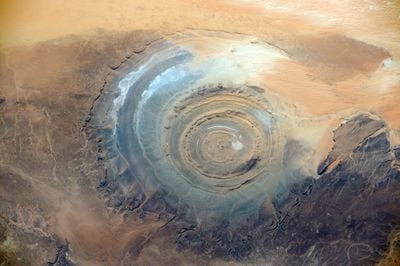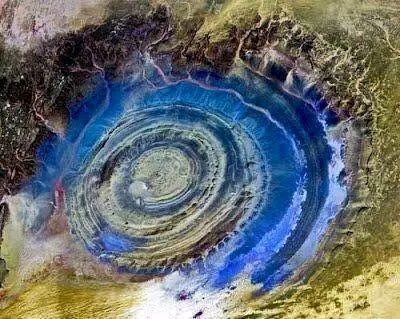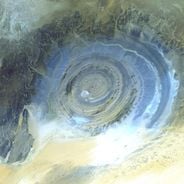
Richat Structure, Rock formation on the Adrar Plateau, Mauritania
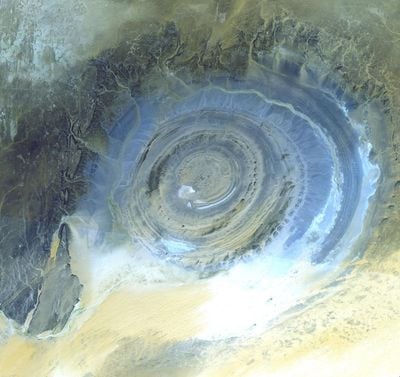
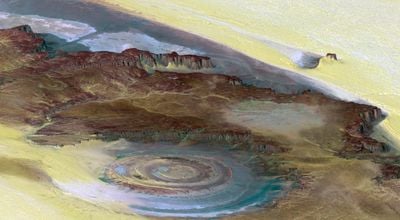
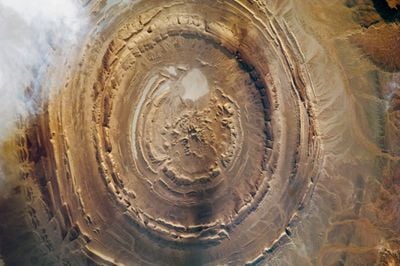
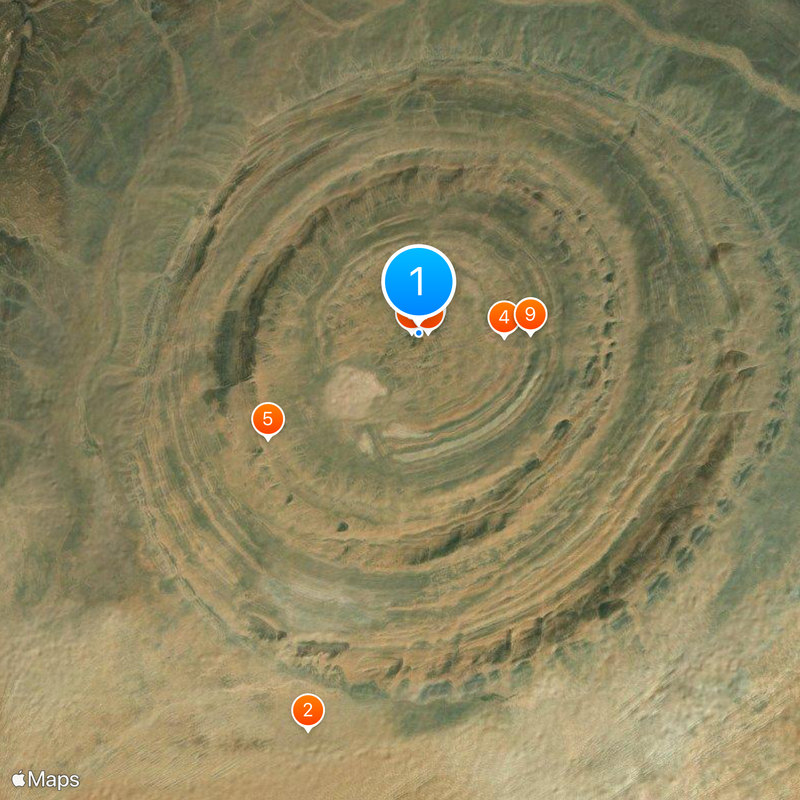
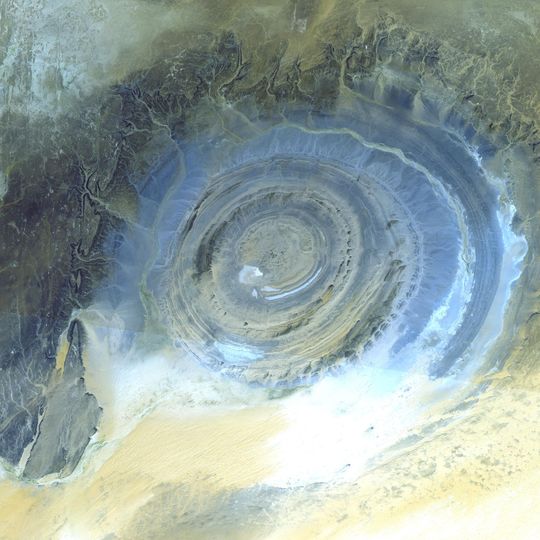
The Richat Structure, also called the Eye of the Sahara, is a large circular rock formation on the Adrar Plateau in Mauritania. It is made of concentric rings of sedimentary rock, quartzite, and limestone that differ in color and texture, forming a layered pattern clearly visible from above.
French explorer Théodore Monod first documented this formation in the 1930s, bringing it to scientific attention. Researchers initially believed a meteorite impact had created the circular shape, but later studies showed that erosion gradually exposed the underlying rock layers over an extremely long period.
Nomads traveling through the desert have used this circular formation as a landmark for generations along caravan routes crossing the Adrar Plateau. The local name "tagense" refers to the round opening of the leather water bags that desert travelers carry, linking the shape of the rock to everyday life in the Sahara.
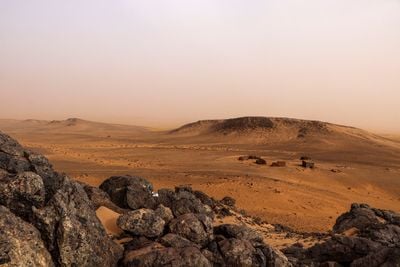
The nearest town is Ouadane, and reaching the site requires a vehicle suited to desert terrain and enough water for the trip, since no paved roads lead there. A GPS device is necessary because the open sand plains have no marked trails to follow.
At the very center lies a megabreccia core, a mass of broken rock fragments pointing to very ancient geological forces that acted deep below the surface. Astronauts have used this formation for decades as a training reference for recognizing surface structures from orbit, since it stands out clearly against the surrounding desert floor.
The community of curious travelers
AroundUs brings together thousands of curated places, local tips, and hidden gems, enriched daily by 90,868 contributors worldwide.