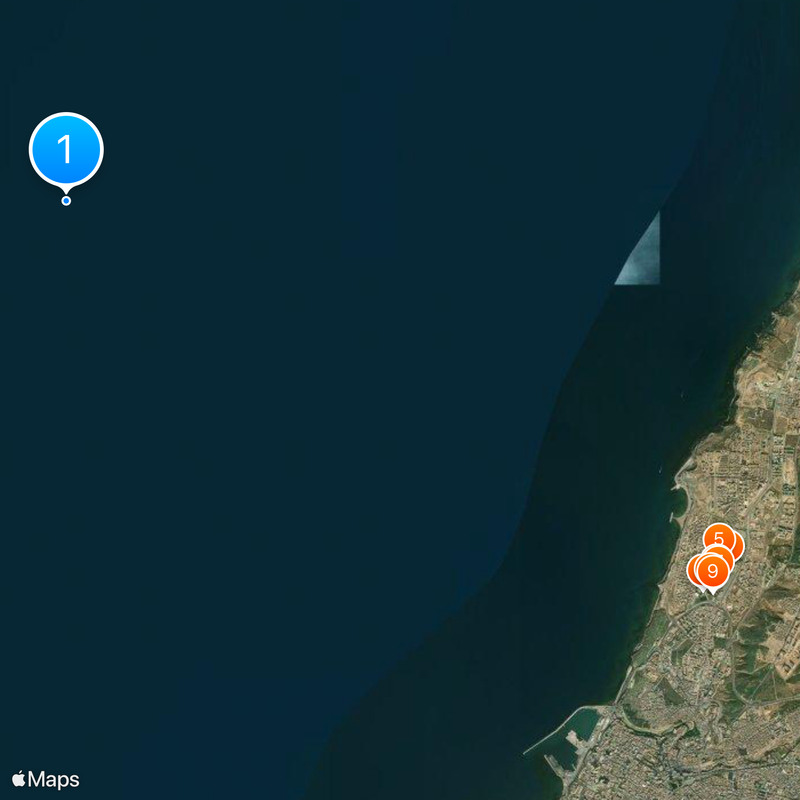
36th parallel north, Circle of latitude across North Africa, Mediterranean Sea, Middle East, Asia, Pacific Ocean, and North America.
The 36th parallel north runs as a geometric line at 36 degrees north latitude around the planet, passing through fourteen countries on three continents. This imaginary line cuts across different landscapes from coastal areas to highlands and connects regions with widely varying climates and geography.
Between 1991 and 1996, this latitude formed the northern boundary of a no-fly zone in Iraq following the Gulf War. The line was monitored through international military operations and influenced airspace over the region during those years.
The parallel connects diverse nations and populations, from the Mediterranean regions through the Middle East to East Asia and the United States.
At this geographic latitude, daylight varies between roughly 14 hours and 36 minutes during summer solstice and 9 hours and 43 minutes during winter solstice. Solar exposure and weather conditions shift noticeably along this line depending on elevation and distance from the ocean.
On the campus of Duke University in North Carolina, Campus Drive crosses this latitude several times and turns it into a teaching tool for geography students. The university uses this feature in education programs to help students understand orientation on Earth.
The community of curious travelers
AroundUs brings together thousands of curated places, local tips, and hidden gems, enriched daily by 91,644 contributors worldwide.