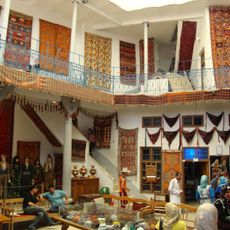
Citadel of Erbil, Ancient fortress in Erbil, Iraq
The Citadel of Erbil is one of the oldest fortified settlements in the world, rising on an oval mound about 30 meters above the surrounding plain in northern Iraq. The entire settlement covers several hundred meters and is encircled by a continuous outer wall that protects the densely built interior.
People have lived here since around 5000 BC without interruption on the same mound, which gradually rose through constant building and decay of earlier layers. The Neo-Assyrian Empire used the site between the tenth and seventh centuries BC as an important stronghold in the region.
The citadel was divided into three mahallas from east to west: Serai, home to notable families; Takya, named after the takyas or dervish houses; and Topkhana, where craftsmen and farmers lived. The Mulla Afandi Mosque is the only religious structure still standing on the mound.
Access to the mound is by a ramp on its side, and the alleys on top are narrow and uneven. The High Commission for Erbil Citadel Revitalization, set up in 2007, oversees restoration, so some houses and the perimeter wall may be closed off. Most residents were moved out that year, leaving the plateau largely empty.
In 2007 the High Commission for Erbil Citadel Revitalization was set up and every resident except one family was moved out for restoration. The government plans to bring 50 families back once the houses are renewed. The mound's slopes have also yielded pottery fragments possibly from the Neolithic period.
The community of curious travelers
AroundUs brings together thousands of curated places, local tips, and hidden gems, enriched daily by 92,684 contributors worldwide.