Cañadón Asfalto Formation, Geological formation in Chubut, Argentina.
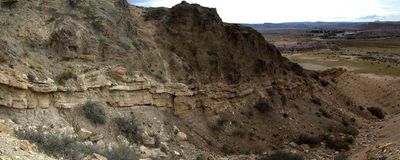
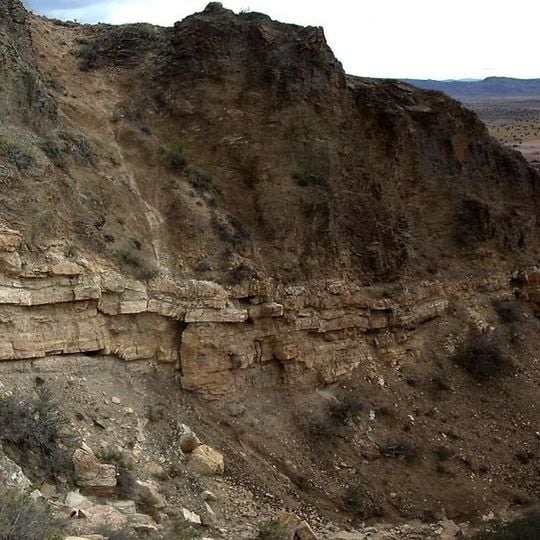
The Cañadón Asfalto Formation is a sequence of sedimentary rock layers in northwestern Patagonia, in the Argentine province of Chubut. It is made up of sandstone, limestone, shale, and volcanic deposits stacked in clearly visible layers.
The formation dates back roughly 171 million years, to a time when the ancient supercontinent Pangaea was breaking apart and the present landmasses were beginning to separate. These shifts created the conditions for lakes and rivers to form and deposit the sediment layers visible today.
The formation is known for dinosaur fossils that have been found here and are now displayed in regional museums. Visitors to the area can see how paleontologists work through the rock layers searching for traces of these animals.
The site is in a remote part of Patagonia, so sturdy footwear is a good idea for walking on uneven rocky ground. Access can become difficult after rain, so the drier months of the year are generally a better time to visit.
Remains of plant species found here are among the oldest of their kind in South America and document a major shift in the plant life of the time. Together with dinosaur bones and traces of ancient lakes, these finds give a rare picture of what the region may have looked like millions of years ago.
The community of curious travelers
AroundUs brings together thousands of curated places, local tips, and hidden gems, enriched daily by 90,890 contributors worldwide.