Navidad Formation, Sedimentary formation near Navidad, Chile.
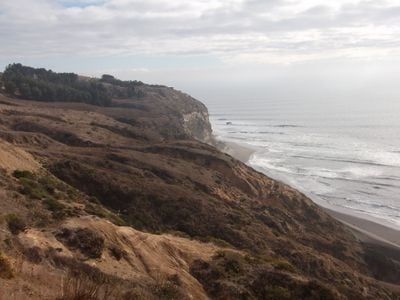
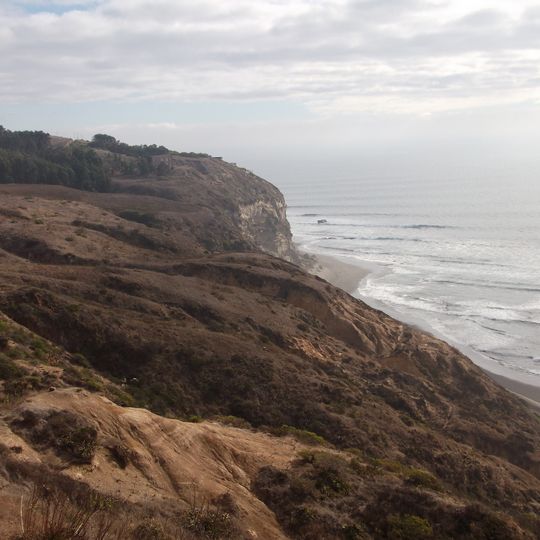
The Navidad Formation is a marine Neogene sedimentary unit in the Chilean Coast Range, outcropping along coastal bluffs from near San Antonio to Boca Pupuya over 16 km. It is 100 to 200 m thick, with a basal conglomerate followed by intercalated sandstone and siltstone, plus smaller conglomerate and coquina beds. Its stratotype is the coastal bluff west of Punta Perro, which does not match Darwin's original description.
Charles Darwin saw the Navidad Formation in September 1834 during the second voyage of HMS Beagle and described it in 1846 in Geological Observations on South America, naming it after the nearby town of Navidad. Gustav Steinmann redefined it in 1895 as Piso Navidad, and Juan Brüggen separated Piso Concepción from it in 1934. Juan Tavera proposed a Burdigalian age in 1968 and 1979; his three-member subdivision was superseded in 2006.
The name comes from the nearby town of Navidad, which Darwin used when he published his description in 1846. Gastropod shells are the most common macrofossils in the formation and many are remarkably well preserved. Two of the first fossil crabs described from Chile, Cancer tyros and Pinnotheres promaucanus, were named by Rodolfo Amando Philippi in 1887.
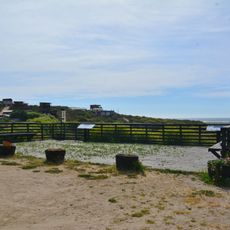
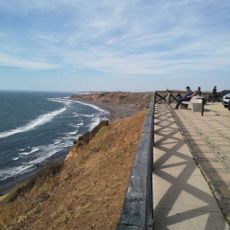
The coastal exposures run about 16 km, from near San Antonio in the north to Boca Pupuya in the south, with the Navidad sector stretching from the Rapel River mouth at Punta Perro to Matanzas beach. The stratotype is the coastal bluff west of Punta Perro. The beds lie horizontal in the cliff face, so the fossil-bearing yellowish sandstones are read from below.
The sedimentary layers hold pollen and spores that hint at wildfires from prehistoric times. These botanical fossils reveal a mix of plant species from both Gondwana and tropical origins that once grew in this region.
The community of curious travelers
AroundUs brings together thousands of curated places, local tips, and hidden gems, enriched daily by 92,999 contributors worldwide.