Anakena, White sand beach in Easter Island, Chile
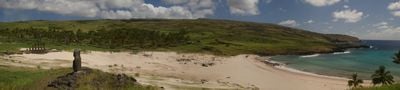
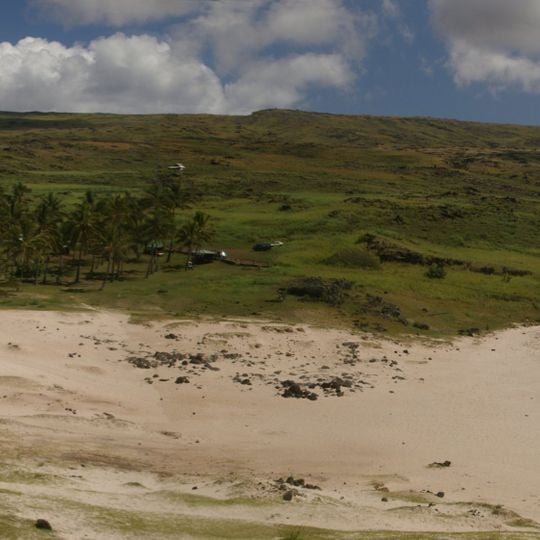
Anakena is a white coral sand beach in Rapa Nui National Park on the north coast of Easter Island, Chile. Pale sand rises from the water toward a grassy margin, with dark rocks and stones scattered across its middle and right side, and low green vegetation creeping onto the sand at both edges. Behind the beach stand two restored ahus: Ahu-Ature with a single moai and Ahu Nao-Nao with seven, two of them deteriorated. A palm grove and a car park lie behind the sand.
According to Rapa Nui tradition, the legendary leader Hotu Matua landed here and established the island's first settlement. This early colonization marked the beginning of an independent civilization on the remote Pacific island.
The beach's name likely comes from 'ana kena', cave of the masked booby, a seabird still nesting on the island; its real name is Hanga Mori o One, or Kings Bay, after the first founder. Islanders also used Anakena as a ceremonial centre where they read from Rongorongo boards, and in Birdman cult years the new Birdman from western clans ended his celebrations here.
The beach is about 20 kilometers from Hanga Roa town and can be reached by rental car, organized tours, or bicycle without difficulty. It is best visited during daylight hours to enjoy the natural light and see the stone structures clearly.
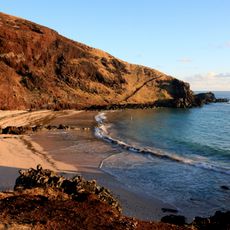
Anakena is one of only two small sandy beaches on an otherwise rocky coastline, and the larger of the two; the smaller beach, Ovahe, lies about 1.5 km away. The beach sits in Rapa Nui National Park on the island's north coast, in Chile's Valparaíso Region.
The community of curious travelers
AroundUs brings together thousands of curated places, local tips, and hidden gems, enriched daily by 92,576 contributors worldwide.