Sarcophagi of Karajía, Archaeological burial site in Utcubamba Valley, Peru
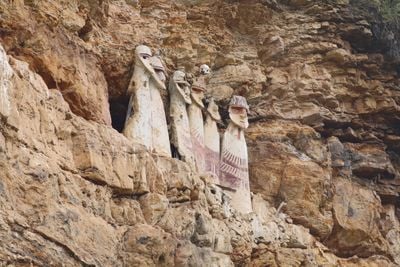
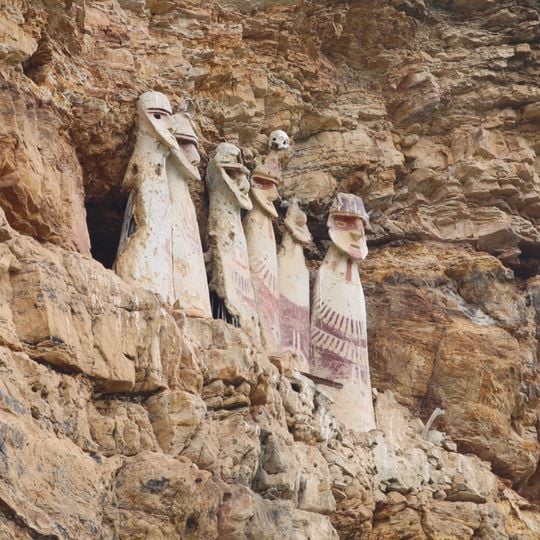
The Sarcophagi of Carajía are seven burial chambers lined up on a cliff face in the Utcubamba region, visible from below as a striking row of earthen structures. Each one was built from clay and has a face-like upper section with a lower chamber that once held human remains.
The Chachapoya placed these clay sarcophagi, called purunmachus, in a cliff recess at Karajía; radiocarbon dating of the remains gave 1460 AD. An earthquake in 1928 toppled one of the original eight into the gorge. The Antisuyo 84 expedition led by Federico Kauffmann Doig reached the site in 1985, guided by Carlos Torres Mas and Marino Torrejón, and found the group intact.
Local residents call the figures the "ancient wise men". The Chachapoya placed their illustrious dead in these purunmachus, a type of sarcophagus of their own, and the faces copy clay versions of crescent-shaped wooden funeral masks with a projecting jaw. Other groups of sarcophagi, at Tingorbamba and Chipuric, lie in the surrounding area.
The hike to reach the observation point takes about 20 minutes on foot, and sturdy shoes are helpful for the uneven terrain. Early morning visits often provide clearer views since afternoon weather in the mountains can change quickly and affect visibility.
The structures bear red and white painted designs along with feathered headdresses and skulls mounted on top, marking them as both decorative and spiritual objects. This arrangement shows that the Chachapoya not only protected their dead but displayed them visibly in the sky.
The community of curious travelers
AroundUs brings together thousands of curated places, local tips, and hidden gems, enriched daily by 92,581 contributors worldwide.