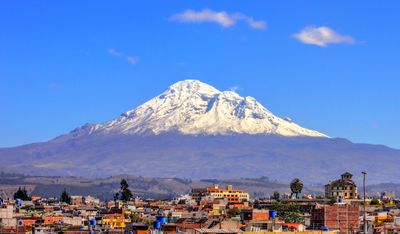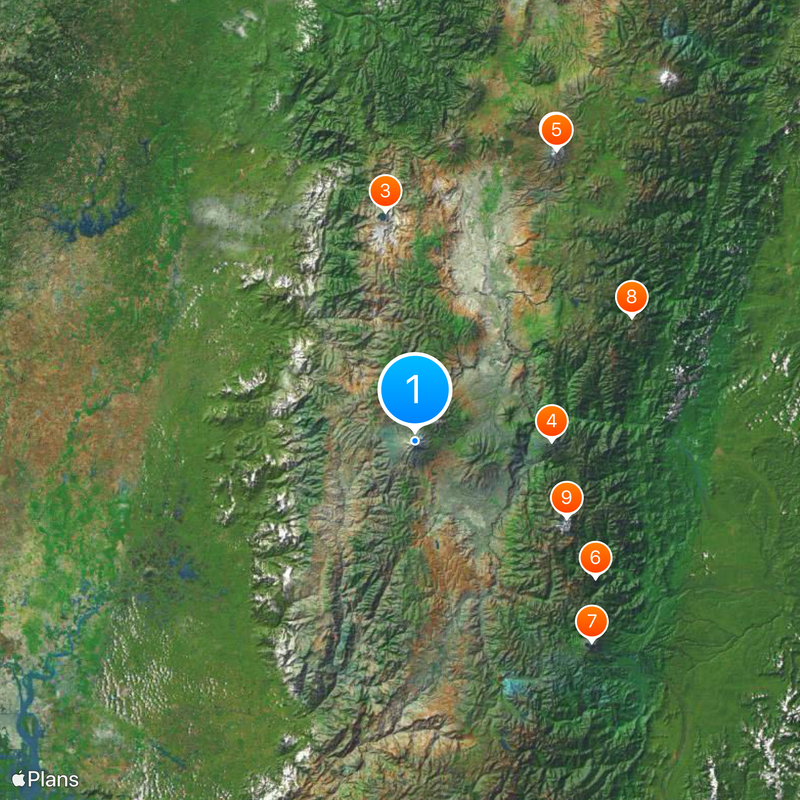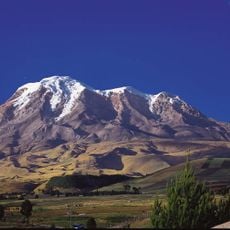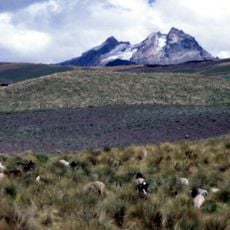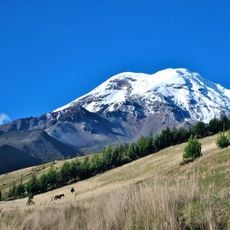
Chimborazo, Stratovolcano in Chimborazo Province, Ecuador
Chimborazo is a stratovolcano in the Cordillera Occidental of Ecuador, with a summit at 6,263 meters (20,548 feet) covered by permanent glaciers. These glaciers have been retreating for decades, yet their meltwater still flows into rivers that supply several provinces.
Edward Whymper climbed to the summit in 1880 as the first documented mountaineer and reached it twice during the same expedition. Before this ascent, the mountain was long considered the highest in the world until more accurate measurements identified other peaks.
Local Quichua speakers derive the name from "chimbarazu", the snow on the other side; another reading gives "women of ice". In Andean mysticism Chimborazo is Taita, the father, while Tungurahua is Mama and Pichincha the child. Vicuña, llama and alpaca live in the surrounding Chimborazo reserve.
The two shelters Carrel at 4,850 meters (15,912 feet) and Whymper at 5,000 meters (16,404 feet) serve as starting points for the ascent to the summit. Climbers should allow several days for acclimatization and check weather conditions carefully before any attempt.
Due to the equatorial bulge, the summit lies farther from the center of the Earth than any other point on the planet, even farther than Everest. This circumstance makes the mountain a special case in geography, although its absolute elevation is lower.
The community of curious travelers
AroundUs brings together thousands of curated places, local tips, and hidden gems, enriched daily by 92,306 contributors worldwide.