William Henry Hudson Museum, History museum in Villa San Luis, Argentina
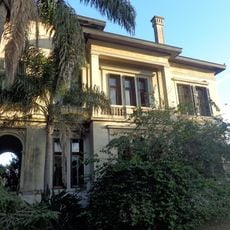
The William Henry Hudson Museum occupies the writer and naturalist's birthplace, a rancho over 200 years old standing among large ombú trees in Ingeniero Allan, Florencio Varela. It holds a library of more than 15,000 books with a section devoted to Hudson's work, a multi-purpose hall, an arboretum and a camping area. Around it lies a 54-hectare Multiple Use Natural Reserve protecting two streams, talas groves and pampa grassland.
The museum was founded in 1957 to commemorate William Henry Hudson, an Argentine-born writer and ornithologist who later became established in England during the 19th century. His work marked a bridge between South American natural history and European scientific thought.
The museum keeps a library of more than 15,000 books, with a section devoted to Hudson's work, and uses it to circulate translations of his writings among young Spanish-speaking readers. A pilot programme distributes leaflets with updated translations and notes on environmental themes to schools in the region. In the first week of August, indigenous communities hold the Pachamama festival here, giving offerings and thanks to the Earth.
The museum lies in Ingeniero Allan, Florencio Varela, halfway between Buenos Aires and La Plata. Guided visits run on Saturdays, Sundays and public holidays for the general public, and Wednesday to Friday for school groups. Entry is free. The reserve covers about 54 hectares, so allow time to walk between the 200-year-old rancho, the library and the streams.
The reserve protects two streams with over 20 fish species and about 200 vertebrate species, including migratory birds such as churrinches and swallows that stop to feed. More than 200 vascular plant species grow in talas groves, pampean steppe, marshes and grasslands, and the "lomas" of the Rolling Pampa still carry small talares.
The community of curious travelers
AroundUs brings together thousands of curated places, local tips, and hidden gems, enriched daily by 92,633 contributors worldwide.