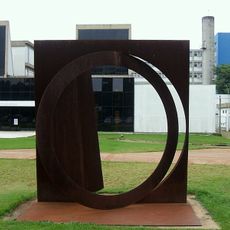
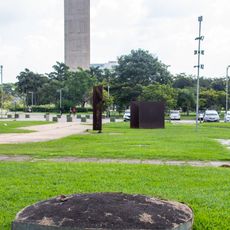
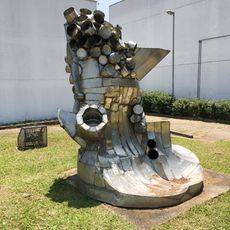
Geosciences Museum at the Institute of Geosciences of the University of São Paulo, Geological research museum at University of São Paulo, Brazil.
The Geosciences Museum houses collections of minerals, rocks, and fossils from different periods of Earth's history. The displays show the physical properties and structures of these natural materials and how they formed.
The museum began in 1935 as the Mineralogy Museum of the Department of Mineralogy and Petrography at the Faculty of Philosophy, Sciences and Letters, on the initiative of Prof. Ettore Onorato. Its first collection was the private mineral collection of mining engineer José Belmiro de Araújo Ferraz, bought that same year. In 1957, when USP opened its geology course, the museum also became a laboratory for undergraduate practical classes. It opened to the general public in 1991 in its current 550 m² space, was renovated with FAPESP support in 1999 and reopened in 2000.
The museum's name changed with its collection: created in 1935 as the Museum of Mineralogy, it became the Geosciences Museum after 1981, when rocks, gems, meteorites and fossils were added to the minerals. School visits since 1994 are adapted to each age group, and since 2004 undergraduate students accompany guided tours.
The museum is located on the university campus and is accessible to visitors through guided tours, often arranged for school groups. It helps to contact ahead to arrange a tour or ask about current opening times.
The museum benefits from being inside an active research institute, regularly adding new findings from ongoing projects to its displays. This means the collections and perspectives shift over time, reflecting current scientific discoveries.
The community of curious travelers
AroundUs brings together thousands of curated places, local tips, and hidden gems, enriched daily by 92,822 contributors worldwide.