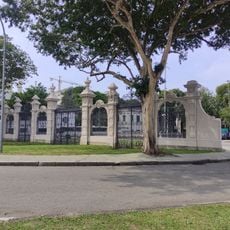
Centro de Tradicoes Nordestinas Luiz Gonzaga, Cultural center in Rio de Janeiro, Brazil.
The Centro Luiz Gonzaga de Tradições Nordestinas occupies the Pavilhão de São Cristóvão, a 156,000 m² hall designed by Sérgio Bernardes with a cable-anchored elliptical roof and no internal columns. Inaugurated in 1962, the building now holds an open-air northeastern fair with two large stages, food stalls and craft shops.
The site was built in the late 1950s to host international trade exhibitions during President Juscelino Kubitschek's administration. It was later transformed into a center for northeastern Brazilian culture and named after the legendary forró musician Luiz Gonzaga.
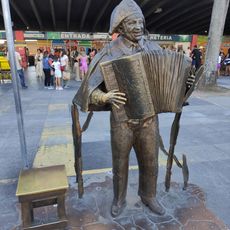
The center is named after Luiz Gonzaga, the "King of Baião." Forró dominates two large stages, where local groups and well-known artists perform; repentistas improvise verses and receive voluntary contributions from listeners. Food and northeastern products are sold in the stalls.
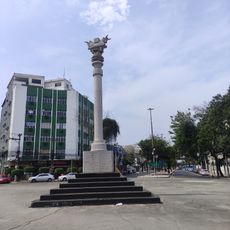
The fair occupies the open-air ground of the former pavilion, whose roof was removed after a 1990 fire and a 1991 storm, so visits happen under the open sky. Two large stages host forró groups and repentistas who improvise verses for listeners. The site sits in São Cristóvão, near the Campo de São Cristóvão where the market stood for years.
The center grew from informal gatherings of northeastern migrants who arrived in trucks at São Cristóvão field and celebrated their arrival with music and food. These spontaneous meetings eventually became the foundation for organizing a formal cultural and commercial space.
The community of curious travelers
AroundUs brings together thousands of curated places, local tips, and hidden gems, enriched daily by 92,785 contributors worldwide.