Praça Rio Branco, Cultural square in central Belo Horizonte, Brazil.
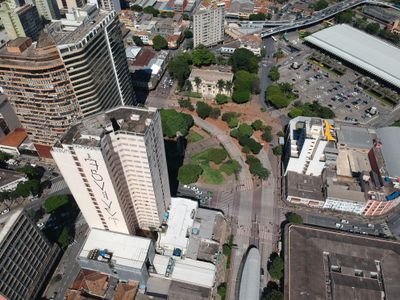
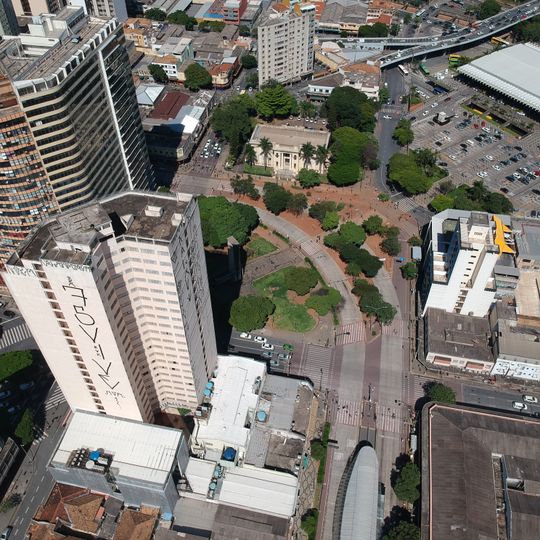
Praça Rio Branco is a public square in central Belo Horizonte with geometric lines and green spaces at the start of Avenida Afonso Pena. The layout combines concrete elements, planted areas, and a central sculptural feature in a modern urban design.
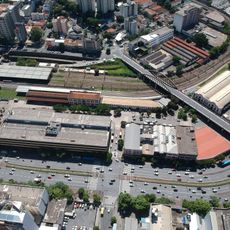
The square marks the start of Avenida Afonso Pena and honours José Maria da Silva Paranhos Júnior, Barão do Rio Branco. In the 1970s the city's bus terminal was installed here, and the site became known as Praça da Rodoviária. In 1982, at the request of mayor Maurício Campos (1979–1982), Mary Vieira's 21-metre sculpture Liberdade em Equilíbrio was placed at its centre. During the 1990s the square was altered without the artist's agreement, changing her original design.
The square is also called Praça da Rodoviária because the city's bus terminal stood here from the 1970s. Its name honours José Maria da Silva Paranhos Júnior, Barão do Rio Branco. The pavement's spiral stripes radiate in several directions from the central sculpture, and the square is officially recognised as cultural heritage by the Belo Horizonte municipal government.
The square opens at the head of Avenida Afonso Pena, and the bus terminal installed there in the 1970s has since left, so do not count on it for departures. The paving is a flat grid of reddish-brown and grey panels with crosswalks at the edges, easy to cross on foot. A long grey strip with curved benches and planted beds runs along the right side, giving a place to sit.
The central sculpture features a spiral-striped base that supports a floating concrete cube, creating an unexpected relationship between the artwork and its surroundings. This design draws attention and invites visitors to notice how the sculptural elements interact with the public space.
The community of curious travelers
AroundUs brings together thousands of curated places, local tips, and hidden gems, enriched daily by 93,549 contributors worldwide.