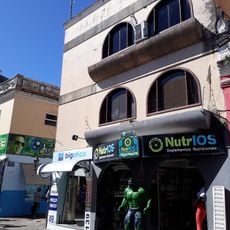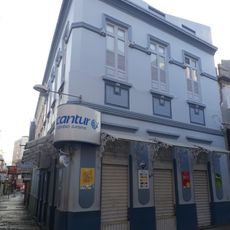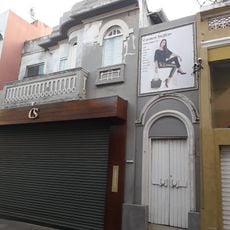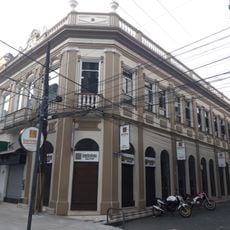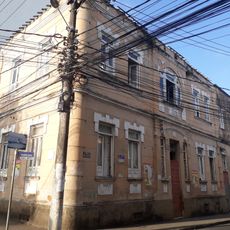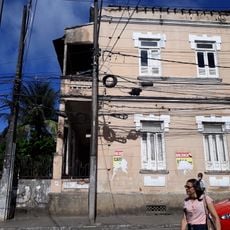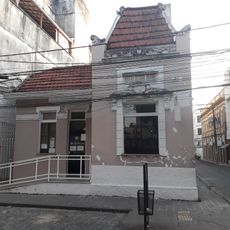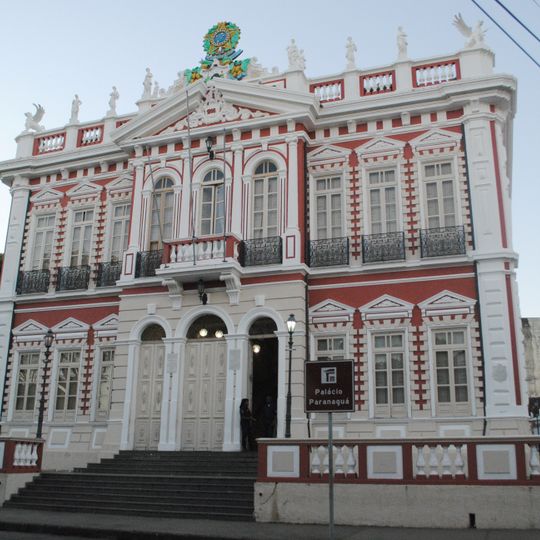
Palácio do Paranaguá, Eclectic palace in Ilhéus, Brazil.
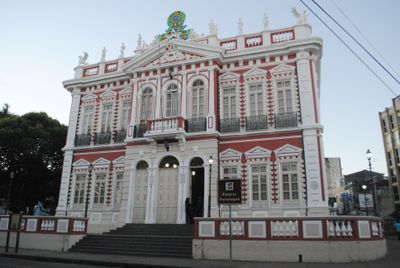
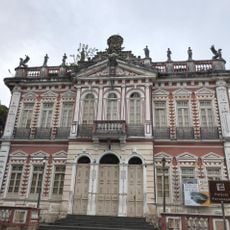
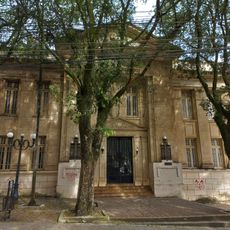
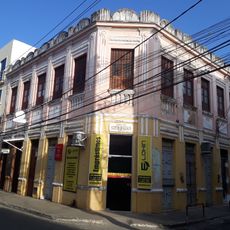
The Palácio do Paranaguá is a neoclassical building constructed between 1898 and 1907 on the site of the former Jesuit Casa Nossa Senhora do Socorro. Its cornerstone was laid on 22 January 1898 by Lieutenant Colonel Domingos Adami de Sá, then intendente. The palace has two floors and a white facade, and it now houses the Museum of the Captaincy of Ilhéus.
The cornerstone was laid on 22 January 1898 by Lieutenant Colonel Domingos Adami de Sá, the city's intendant, on the grounds of the former Jesuit Casa Nossa Senhora do Socorro. The building opened on 22 December 1907 as the seat of the municipal intendancy. It was emptied in 1919 for structural problems, renovated and reopened in 1923, and remained an administrative seat until 2015.
Since 2017 the palace has housed the Museu da Capitania de Ilhéus, planned from 2013 with advice from IPAC and the Diretoria de Museus of the Fundação Cultural do Estado da Bahia. Its collection of documents, furniture and objects traces Ilhéus from the captaincy period, with educational material on the cocoa cycle and the 2020 exhibition "Ilhéus - Rumo aos 500 Anos".
The palace is located on Rua Santos Dumont in a central area of the city and is easy to find. Parts of the building are accessible to visitors, though it is advisable to check ahead which areas are currently open to the public.
The palace's name honours João Lustosa da Cunha Paranaguá, Marquis of Paranaguá, who in 1881 signed the provincial law raising the Vila de São Jorge dos Ilhéus to city status. The building itself dates from 1898–1907, so it holds no 18th-century furniture from the cocoa era.
The community of curious travelers
AroundUs brings together thousands of curated places, local tips, and hidden gems, enriched daily by 93,146 contributors worldwide.