Bataclan Ilhéus, Historic site in Ilhéus, Brazil
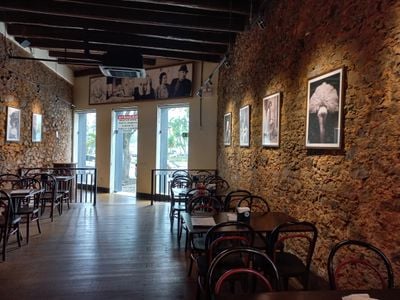
Bataclan Ilhéus occupies a building on Praça José Marcelino, on Avenida 2 de Julho in the historic centre, near the old port where sailing boats once docked. Inside, a dark wood-beam ceiling carries a white air conditioner, pale walls frame two tall doorways with a sign asking that the door stay shut while the air conditioning runs, and an uneven stone wall holds five framed pictures. Wooden tables and chairs with rounded backs fill the floor.
From 1926 to 1938, the building operated as a casino, cabaret, and brothel serving wealthy cocoa plantation owners from the region. After this period, it became an important cultural site in the city's history.
The name honours the Bataclan theatre in Paris. Its dancers and "damas de companhia" were, according to the source, always well dressed and groomed to match the house's wealthy clientele, and the casino kept the whole establishment running. The building is often cited in Jorge Amado's works, which drew tourists to photograph it even while it stood in ruins.
The building reopened in 2004 after renovation funded by Petrobras through the Rouanet Law, with work begun in early 2000. It now operates as a restaurant, so the dark wood-beam ceiling, stone wall and framed portraits are seen while dining. The sign over the two doorways asks that the door stay shut while the air conditioning is on.
The casino, not the shows, kept the house running: gambling profits sustained its high luxury until Brazil banned the activity in the 1950s, when the Bataclan declined. Its name was taken from a Paris performance hall.
The community of curious travelers
AroundUs brings together thousands of curated places, local tips, and hidden gems, enriched daily by 94,444 contributors worldwide.