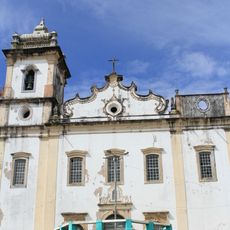
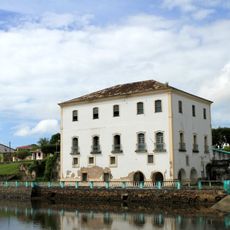
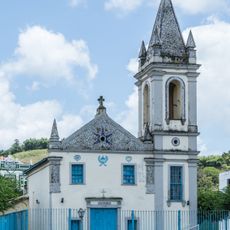
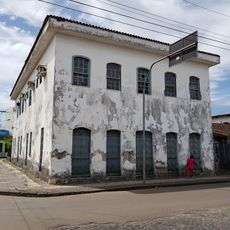
Arará, Commercial ship in Salvador, Brazil.
Arará was a Brazilian steam cargo ship of 1,075 gross register tons, built of steel with a hull 73.2 m long and 10.7 m wide, drawing 3.9 m. A triple-expansion steam engine of 143 nominal HP drove a single propeller. Completed in March 1907 at R. & W. Hawthorn, Leslie & Co. in Hebburn on Tyne as Beshtau, it was renamed Providencia in 1925, Serra Azul in 1933 and Arará in 1935. It was torpedoed and sunk on 17 August 1942.
Built in 1907 at Hebburn on Tyne as the Russian steamer Beshtau, the ship was sold in 1925 to Carbonífera Próspera and renamed Providencia. In 1933 it passed to Companhia Serras de Navegação & Comércio as Serra Azul, and in 1935 it took the name Arará. On 17 August 1942, while rescuing survivors of the Itagiba off Bahia, it was torpedoed by U-507 and sank, killing 20 crew and some rescued passengers.
The name Arará was given in 1935, the ship's fourth name after Beshtau, Providencia and Serra Azul. Its sinking on 17 August 1942, while rescuing survivors of the Itagiba, caused consternation in neutral Brazil and helped push the country into war on 22 August.
The wreck lies about 30 nautical miles south of Salvador, off the Bahia coast, at a depth not given in the sources; it is not a dive site with marked access. The sinking site is best understood through the accounts and artifacts held in Salvador's maritime collections rather than by looking for the ship at the harbour.
The Arará was not part of the famous "Aras" class that included the Araraquara, sunk two days earlier. It had been launched in 1907 in Hebburn on Tyne as the Russian steamer Beshtau, then sailed as Providencia and Serra Azul before receiving its final name in 1935.
The community of curious travelers
AroundUs brings together thousands of curated places, local tips, and hidden gems, enriched daily by 93,861 contributors worldwide.