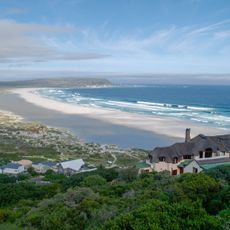
Fynbos, Plant formation in Western Cape, South Africa
This plant formation in the Western Cape grows on nutrient-poor soils and includes small shrubs with fine leaves such as proteas, heathers and restios. The vegetation forms dense low thickets that spread over hills and coastal plains throughout the region.
The Dutch form fynbosch was recorded in casual use in the late 19th century, and John Bews described the "South-Western or Cape Region of Macchia or Fynbosch" in the early 20th century. In the later 20th century "fynbos" became the standard term for the vegetation of the southwestern Cape. Fire has long shaped the vegetation, and pines and Australian wattles were introduced from the 19th century and the mid-1870s.
The name derives from the Dutch fynbosch, recorded in casual use in the late 19th century; John Bews noted Cape inhabitants applied it to any small woodland growth without timber trees. Rooibos (Aspalathus linearis) is gathered wild and farmed around the Cederberg for tea, and honeybush tea comes from endemic Cyclopia species. Protea blooms are sold as long-lasting cut flowers.
The best months for observation are July through November when many species flower in the national parks. You can find this plant formation along coastal trails and in the hills where paths wind through low vegetation.
This vegetation holds about 9,000 plant species in a relatively small area making it one of the most diverse regions outside tropical rainforests. Many plants only germinate after a fire because flames crack open their hard seed coats.
The community of curious travelers
AroundUs brings together thousands of curated places, local tips, and hidden gems, enriched daily by 94,132 contributors worldwide.