Ts'ehlanyane National Park, National park in Lesotho
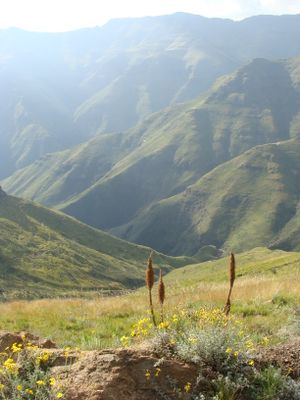
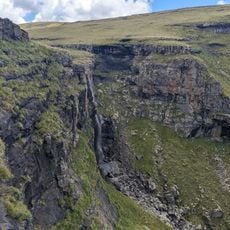
Ts'ehlanyane National Park protects a high-altitude patch of the Maloti Mountains in Leribe District, ranging from 1,940 to 3,112 metres and mostly sub-alpine. It lies at the junction of the Ts'ehlanyane and Holomo rivers and holds one of Lesotho's few remaining stands of indigenous forest, with large oldwood (Leucosidea) trees and rare undergrowth plants. The park covers 5,600 hectares within the Maloti-Drakensberg Transfrontier Conservation Area.
The park's origin is tied to the access road to the Mamohale tunnel, driven in May 1991 as the first adit of the Lesotho Highlands Water Project; this adit runs 22 km from Katse Dam to the As River outfall near Clarens. The protected area lies at the junction of the Ts'ehlanyane and Holomo rivers and safeguards one of Lesotho's few remaining stands of indigenous forest.
The name "Ts'ehlanyane" is the local common name for the berg bamboo (Thamnocalamus tessellatus), the Drakensberg endemic plant from which the river and park take their name. Stands of this bamboo grow on the banks of the rivers and streams and hold cultural significance for the Basotho people. The park may be the most important refuge for the plant in the entire Maloti-Drakensberg range.
Access is along a gravel road from the A1 highway, and a vehicle with good clearance is recommended since the road can be rough in places. The park's main lodge offers chalets and a restaurant, but it fills up on weekends and during school holidays, so booking ahead is worth it.
Berg bamboo (Thamnocalamus tessellatus), the plant that gives the park its name, may have its most important refuge in the whole Maloti-Drakensberg range here. It is the host plant of the bamboo sylph (Metisella syrinx), an endangered butterfly. The park also holds mountain fynbos found nowhere else in the world.
The community of curious travelers
AroundUs brings together thousands of curated places, local tips, and hidden gems, enriched daily by 94,032 contributors worldwide.