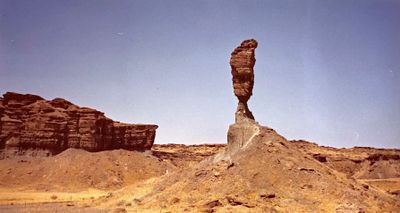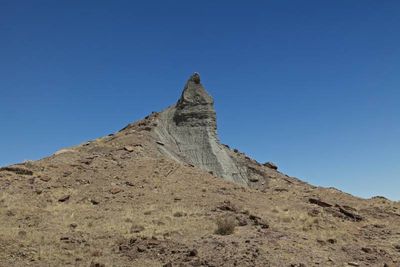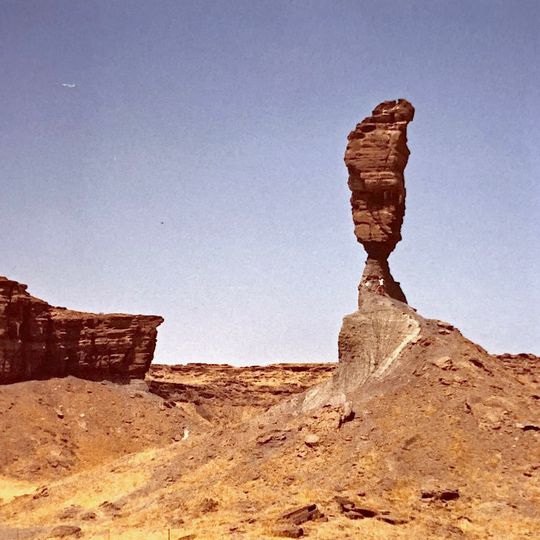
Mukurob, Natural sandstone formation in Hardap Region, Namibia.
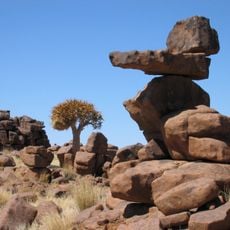
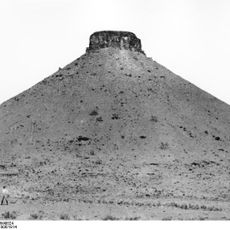
Mukurob was a sandstone formation near Asab in the Namib desert, 12 m high and up to 4.5 m wide, weighing about 450 tons. Its base measured only 3 m by 1.5 m, much narrower than the block it carried. It stood on a softer pedestal that weathered faster than the upper rock, leaving a thin neck under a larger mass.
The sandstone formation had stood for more than 50,000 years on the plateau before it collapsed suddenly in 1988. This collapse occurred during a period of major political transformation in Namibia and ended the existence of one of the region's defining landmarks.
The rock held deep meaning for the Nama people, who saw it as a sign of their lasting connection to this territory and believed their control over the land depended on its presence.
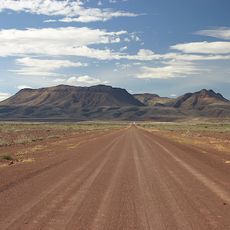
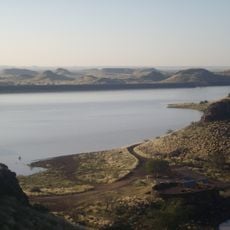
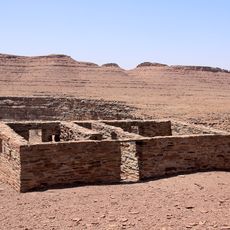
The collapsed remains lie near the B1 national road by Asab in the Hardap Region, so the site is reached by vehicle rather than on foot. The surrounding Namib terrain is arid and exposed, with no facilities at the spot; carry your own water and fuel. The rock itself is gone, so look for the fallen blocks on the ground.
The collapse was discovered the next morning by a farmer and his three sons. A study linked the timing to the 1988 Spitak earthquake in Armenia, which registered in Namibia that night; others blamed a rainstorm the week before. The cause is still undetermined.
The community of curious travelers
AroundUs brings together thousands of curated places, local tips, and hidden gems, enriched daily by 94,370 contributors worldwide.