National Museum of the Democratic Republic of Congo, National museum in Lingwala district, Kinshasa, Democratic Republic of Congo.
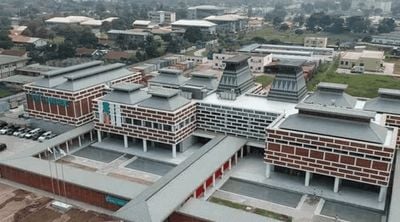
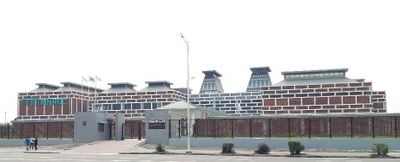
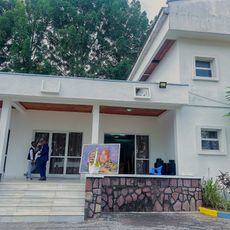
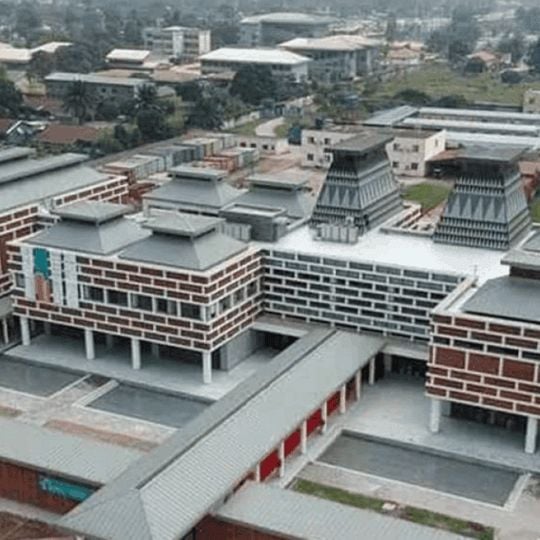
The National Museum of the Democratic Republic of Congo is a cultural history museum in Kinshasa. Its long facade alternates white and dark horizontal bands, and diamond-shaped motifs on the exterior refer to the traditional royal palaces of the Kuba confederation. Inside, three exhibition halls covering 6,000 m2 can present 12,000 objects in their cultural context.
The project dates to the 1970s, when President Mobutu Sese Seko, after hosting Léopold Sédar Senghor in 1968, sought a national museum and obtained a 1970 accord with Belgium's Royal Museum for Central Africa. Financial difficulties around 1975 shelved it. In 2016 Joseph Kabila laid the first stone; South Korea's KOICA funded the $21 million building, handed over on 14 June 2019 and inaugurated by Félix Tshisekedi on 23 November 2019.
The museum displays objects that reflect how different Congolese communities lived and what mattered to them. Visitors can see how masks, statues, and musical instruments fit into daily life and spiritual practices across the country.
The museum stands in Kinshasa and holds three public exhibition halls covering 6,000 m2, with two storage rooms, a conference room, a workshop room and a library. The building uses solar energy and natural air circulation, with air conditioning only partial. Most of the Institute of National Museums holdings remain in depots rather than on display.
The building's outer shape draws from patterns found in the royal structures of the Kuba people, an ethnic group from central Congo. This design choice links the modern museum directly to an ancient art tradition of the region.
The community of curious travelers
AroundUs brings together thousands of curated places, local tips, and hidden gems, enriched daily by 93,127 contributors worldwide.