Gunung Padang, Archaeological site in West Java, Indonesia.
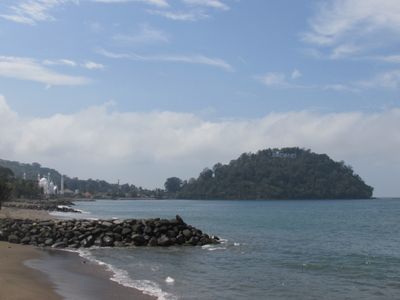
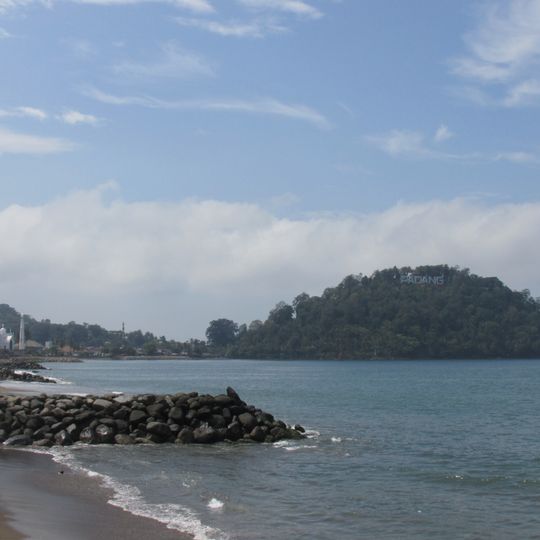
Gunung Padang, also called Bukit Sitti Nurbaya, is a small hill about 80 metres high at the mouth of the Batang Arau in Padang Selatan district, Padang, West Sumatra. Its summit holds Taman Siti Nurbaya, a garden of about 180 square metres named after the lovers Syamsul Bahri and Siti Nurbaya. Japanese-era defences remain on the slopes: the Pilboks fort, a four-sided half-polygon structure with a large iron cannon, plus bunkers and cannons.
During the Japanese occupation of West Sumatra, roughly 1942 to 1945, Gunung Padang served as a coastal defence base. The first fort, called Pilboks, is a four-sided half-polygon structure holding a large iron cannon; a second building marked BOW has two roofless rooms. Two more bunkers stand near the summit, and locals use one lower bunker as a warehouse.
The hill is also called Bukit Sitti Nurbaya, after the heroine of Marah Rusli's novel Sitti Nurbaya. At the summit, Taman Siti Nurbaya, about 180 square metres, is presented as the place where Siti Nurbaya and Syamsul Bahri met.
The summit, about 80 metres above sea level, is reached on foot and holds Taman Siti Nurbaya, roughly 180 square metres in size. Along the way stand Japanese-era bunkers and cannons, including the first bunker beside a resident's house and a second one facing a shop and used as a warehouse. Sturdy shoes help on the climb.
The hill's other name, Bukit Sitti Nurbaya, comes from the novel Sitti Nurbaya by Marah Rusli; the summit garden is presented as an interpretation of where Samsul Bahri and Siti Nurbaya met. The Japanese-built Pilboks fort has a four-sided, half-circular plan and still holds a large iron cannon.
The community of curious travelers
AroundUs brings together thousands of curated places, local tips, and hidden gems, enriched daily by 94,144 contributors worldwide.