Leighton Battery, Military heritage site in Mosman Park, Australia.
Leighton Battery is a World War II coastal defense installation near Fremantle that sits largely underground, with interior structures protecting against air and naval attack. Connecting the various functional areas are subterranean passages that allow movement through ammunition storage, maintenance areas, living quarters, and command centers.
Buckland Hill was chosen in 1941 for four 3.7-inch anti-aircraft guns, operational later that year. In mid-1942 the Arthur Head battery was ordered relocated here as Leighton Battery; two 6-inch Mk VII naval guns arrived in early 1943 and were proof-fired on 8 February 1943. The Australian Women's Army Service undertook much of the work. The 6-inch guns left for Albany in March 1945, and three 5.25-inch dual-purpose guns, begun in May 1945, were proof-fired in November 1947.
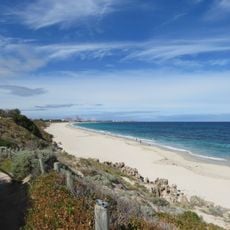
The name Leighton comes from the nearby Leighton Beach, and the site is now a public reserve managed by the Town of Mosman Park. Volunteers from the Artillery Museum of WA run guided tours through the tunnels, where rooms are set up to show how the battery operated. The underground complex is also listed on the State Register of Heritage Places.
Visitors can explore the underground areas either independently or join a guide-led tour to learn more about the different sections and their functions. Parking is available on site, and the entrance is accessed from Boundary Road.
The guns were scrapped in 1963, so no original weapons remain; what survives is the underground complex of tunnels over 300 m long, dug 10 m deep, with magazines, engine and rest rooms, an observation post and a semi-buried command post. At its peak the battery held up to 135 men and women, and it never fired at an enemy target.
The community of curious travelers
AroundUs brings together thousands of curated places, local tips, and hidden gems, enriched daily by 94,532 contributors worldwide.