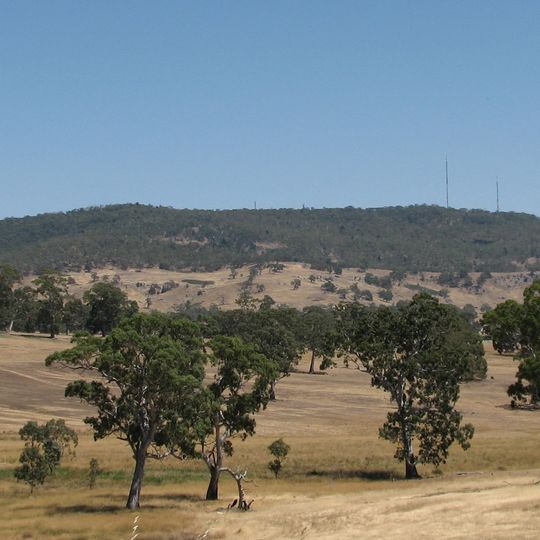
Mount Alexander, Granite mountain summit near Harcourt, Australia
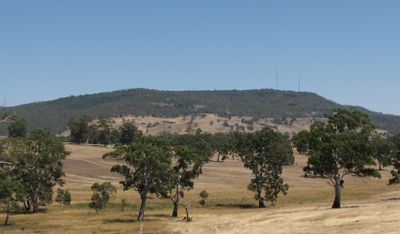
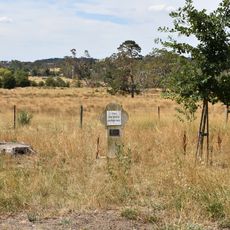
Mount Alexander is a granite peak located near Harcourt in Victoria, reaching 744 meters above sea level with slopes that rise distinctly from the surrounding landscape. The Mount Alexander Loop trail network connects multiple entry points, each marked with directional signs and equipped with picnic facilities for different walking abilities.
Major Thomas Mitchell climbed the peak in 1836 and initially named it Mount Byng before changing it to Mount Alexander as a tribute to Alexander the Great. This renaming marked an important moment in the European exploration and mapping of the Victorian landscape.
The Jaara Jaara people knew the mountain as Lanjanuc or Liyanganuk and used it as a sacred ceremonial ground and outlook; it was the home range of their Liarga baluk clan. In January 1840 George Robinson recorded camps, stone ovens for baking emu and murnong, and fish. A Liarga baluk water well and oven mound were found on the southern slopes in the 1990s.
The summit is reached by Joseph Young Drive, the zig-zag road across the range that Lt-Col. James H. Lang proved feasible in 1928; Langs Lookout on the way commemorates the drive. Dog Rocks on the western slopes is used for abseiling. A granite cairn built in 1876 stands on the summit as a trigonometric station.
The southern shepherd's purse plant grows here and nowhere else in Victoria, making it the only location where this rare brassica species still survives. This exclusive botanical feature draws attention from plant specialists and nature enthusiasts alike.
The community of curious travelers
AroundUs brings together thousands of curated places, local tips, and hidden gems, enriched daily by 95,308 contributors worldwide.