Wairau Bar, Archaeological settlement at Wairau River delta, New Zealand
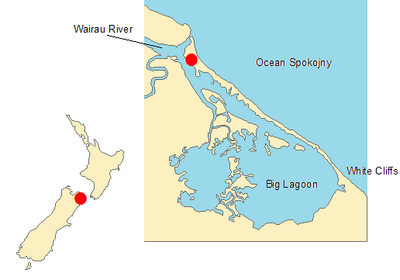
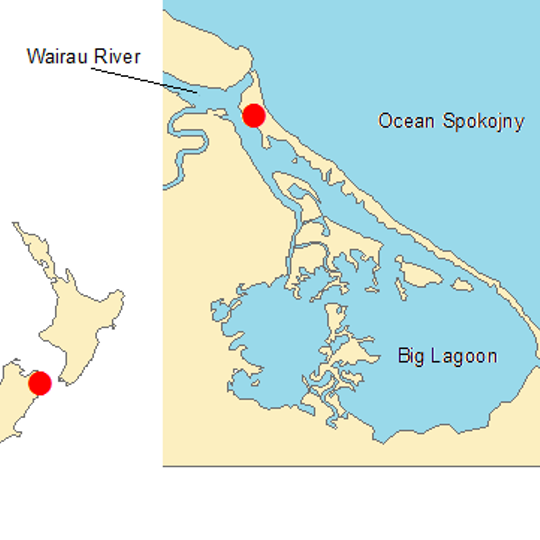
Wairau Bar is a gravel bar at the mouth of the Wairau River, where it meets Cloudy Bay on the northern coast of New Zealand's South Island. The site holds human skeletons and more than 2,000 artifacts from the earliest period of human settlement in New Zealand.
The site was occupied twice over about 20 years, with radiocarbon dating of moa egg fragments placing activity at 1288–1300 CE. Schoolboy Jim Eyles found the first grave in 1939; from 1942 Roger Duff of the Canterbury Museum excavated with him, and digs continued in 1942–1959, 1963–1964 and 2008–2009, uncovering 44 burials and about 2,000 artefacts.
The dead were buried in shallow graves with heads to the east and feet to the west, as in eastern Polynesia. Grave goods included moa-bone reel necklaces, whole moa eggs used as water carriers, argillite adze heads, harpoon heads and tattoo chisels. Analysis of teeth and bones showed the first settlers ate soft starchy food, unlike later burials.
The site is protected and research activities require official permission. Visiting through a guided tour led by a specialist is the best way to understand what was found here and why it matters.
Among the burial goods found at the site were moa eggs used as containers, suggesting the first settlers still encountered this giant bird alive. The moa later disappeared entirely, and Wairau Bar offers one of the few direct traces of the time when people and the bird shared the same land.
The community of curious travelers
AroundUs brings together thousands of curated places, local tips, and hidden gems, enriched daily by 93,428 contributors worldwide.