Chest opened
+${chestReward.xp} XP
Explorer
NOUVEAU ×${chestReward.collectible.quantity}
tapez pour fermer

See the monuments around you in AR Open chests in the app

Around Us is built for your phone — point your camera at the streets and discover the monuments and places around you in augmented reality. Around Us is built for your phone — chests unlock when you walk, explore and capture nearby places.

•

Enable Location

We need your location to show you interesting places around you

Discover nearby places

Find interesting locations and hidden gems around you

Precise directions

Get accurate directions and distances to places

Your location is never shared with other users. It's only used when you tap the location button.

Klondyke Coke Ovens

Log in to your account

Start exploring — it's free

Trusted by 92,785 travelers worldwide

Continue with Google
Continue with Apple
or

We will send you a code to connect

By continuing, you accept our Terms and Conditions and our Privacy Policy

Check your inbox

We've sent a pincode in your inbox. Please enter the code below.

Klondyke Coke Ovens, Industrial heritage site in Brassall, Queensland, Australia.

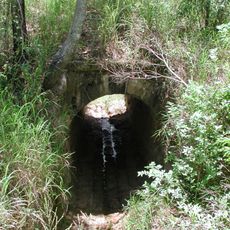
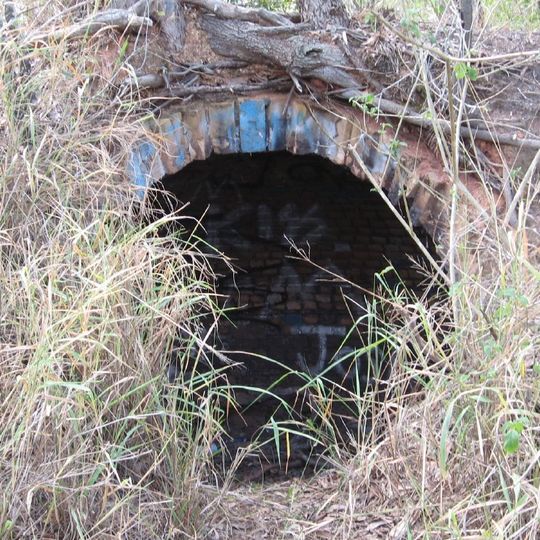
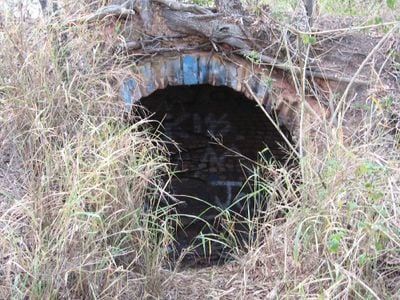
The Klondyke Coke Ovens consist of twelve brick domed structures arranged in two rows, forming part of a long mound. Each beehive-shaped chamber contained individual flues for processing coal into coke.

Coke production at Klondyke began in the 1880s, and the site saw two widely separated periods of working, several changes of ownership and names. The surviving beehive ovens were built in the 1940s; the last change of ownership and name came in 1948, when little coal remained, and production ceased in the early 1950s. The first mine on the site, opened in 1871, was the Eastwood mine, named after its owner John Eastwood.

Coke was made by shovelling coal about 0.6 metres deep into an oven, sealing the door and letting it carbonise for roughly three days before cooling and raking it out. About two tonnes of coal yielded one tonne of coke. The ovens sit in double rows, or batteries, with rubble and earth packed between them for insulation.

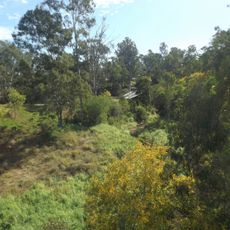
Access the ovens via a path from W.M. Hughes and Musgrave Streets in the area. Note that vegetation now covers parts of the site, so wear sturdy shoes and watch your footing carefully.

The ovens were charged with about 0.6 metres of coal, sealed, and left to carbonise for roughly three days; nearly two tonnes of coal yielded one tonne of coke. Water sprinkled through the door hole cooled the coke, which was then drawn out by hand with rakes.

The community of curious travelers

AroundUs brings together thousands of curated places, local tips, and hidden gems, enriched daily by 92,785 contributors worldwide.
Start exploring
Location
GPS coordinates
-27.59300,152.75400
Latest update
October 25, 2026 05:08
Reviews
Share your experience

No review yet

Discussions
Start a discussion...

No discussion yet

« Klondyke Coke Ovens - Industrial heritage site in Brassall, Queensland, Australia » is provided by Around Us (aroundus.com). Images and texts are derived from Wikimedia project under a Creative Commons license. You are allowed to copy, distribute, and modify copies of this page, under the conditions set by the license, as long as this note is clearly visible.

Discover hidden gems everywhere you go!

From secret cafés to breathtaking viewpoints, skip the crowded tourist spots and find places that match your style. Our app makes it easy with voice search, smart filtering, route optimization, and insider tips from travelers worldwide. Download now for the complete mobile experience.
Around Us App Screenshot
❝

A unique approach to discovering new places❞

— Le Figaro

❝

All the places worth exploring❞

— France Info

❝

A tailor-made excursion in just a few clicks❞

— 20 Minutes

Around Us
Travel Guide & Maps
Download

Send to your phone

QR Code
1

Open the camera app on your mobile.

2

Point at the QR code with your camera. A notification will appear.

3

Tap the notification to open the link.