Agriculture in Tuvalu, Subsistence farming practices on coral atolls, Tuvalu.
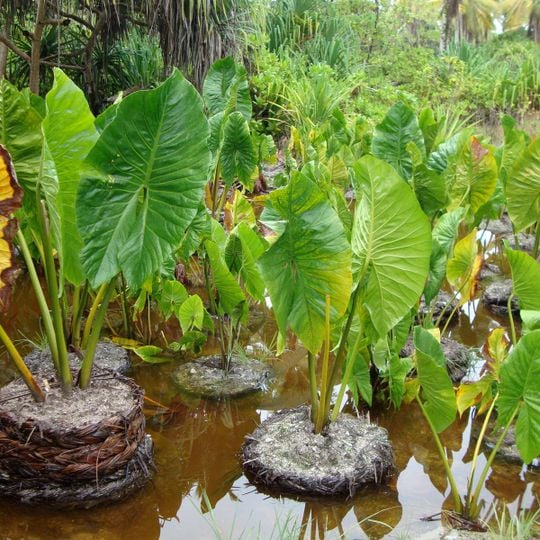
Agriculture in Tuvalu relies on subsistence farming across coral atolls, where farmers dig deep trenches down to the water table and fill them with natural fertilizers to work around poor alkaline soil. The main crops grown this way are coconut, pulaka, taro, bananas, and breadfruit.
From the mid-1800s onward, copra production became the economic foundation of Tuvalu as farmers turned to processing coconuts. This shift shaped the islands' economic direction for generations.
Ownership of pulaka pits and coconut trees remains a marker of social standing in Tuvaluan communities today, showing how deeply farming is woven into local identity. This link between land and status appears in daily routines and family decisions throughout the islands.
Local gardens and traditional growing methods can be observed in villages, where most people take part in food production. Visiting during the active growing season gives the best chance to see fields in use and everyday farming routines.
Rising sea levels are pushing salt water into underground cultivation pits, threatening pulaka crops that families have grown for generations. This is forcing farmers to rethink age-old methods and try new approaches to keep their food supply going.
The community of curious travelers
AroundUs brings together thousands of curated places, local tips, and hidden gems, enriched daily by 60,000 contributors worldwide.