Theodore Parker Lukens House, Victorian residential house in Pasadena, United States
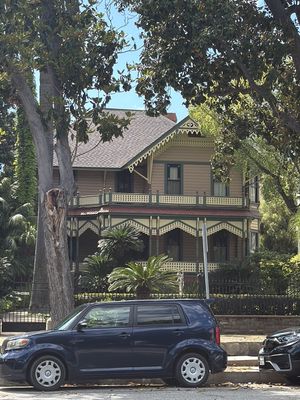
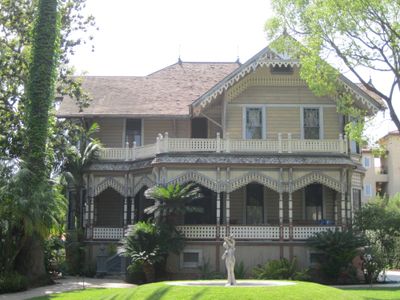
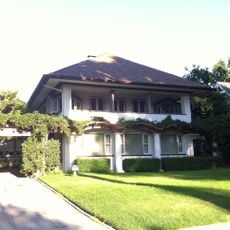
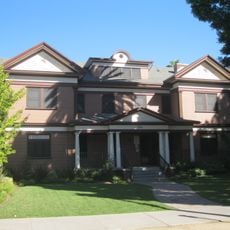
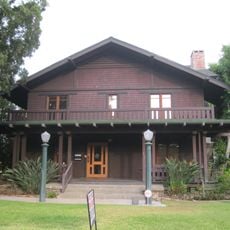
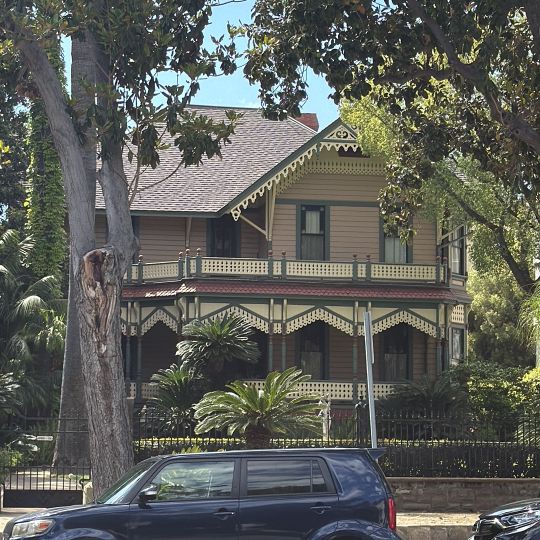
The Theodore Parker Lukens House is a Victorian residence featuring deep gables, ornamental wooden detailing, and a two-story front porch with patterned bargeboards designed to resemble draped fabric. The structure blends architectural elements from multiple late 19th-century styles into a coherent design.
Built between 1886 and 1887 by architect Harry Ridgway, the house incorporated design principles from Stick, Eastlake, and Queen Anne architectural movements of that period. These stylistic choices were typical of Southern California residential construction during the late 19th century.
The residence belonged to an early environmental advocate who helped establish the Sierra Club and collaborated with naturalist John Muir on conservation efforts. Visiting today, one can sense how this home reflected the values of people deeply committed to protecting wild places during that era.
The residence is situated in a residential neighborhood and can be viewed from the street, where the front porch is the most visible and detailed feature. Best viewing conditions are during daytime hours when sunlight highlights the ornamental woodwork and architectural details.
The original owner conducted early reforestation work in the 1890s, planting thousands of pine trees in the mountains above Pasadena as conservation experiments. His tree-planting efforts were pioneering attempts to restore forest cover in the region and left a lasting impact on the local landscape.
The community of curious travelers
AroundUs brings together thousands of curated places, local tips, and hidden gems, enriched daily by 91,138 contributors worldwide.