Cosigüina, Stratovolcano in Chinandega, Nicaragua
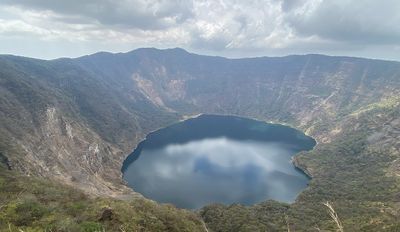
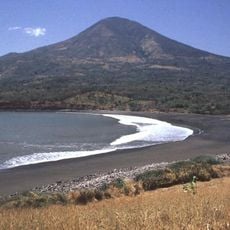
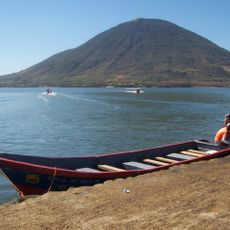
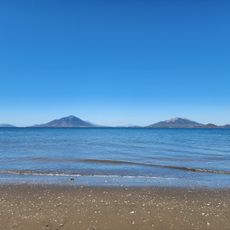
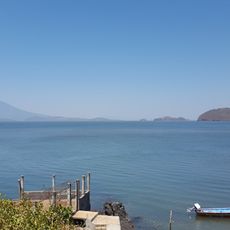
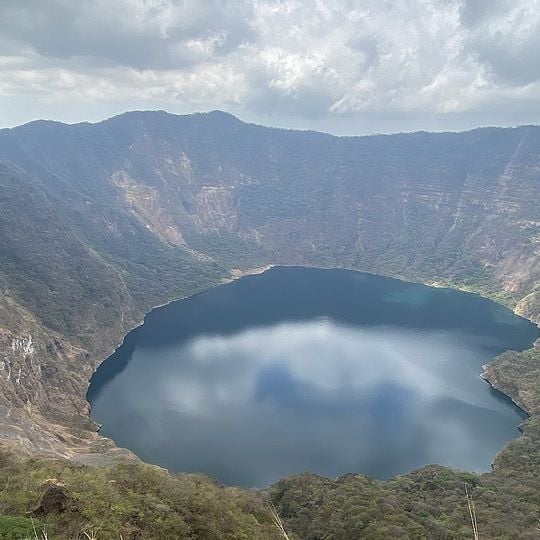
Cosigüina is a stratovolcano in the El Viejo municipality of Chinandega, western Nicaragua, forming a large peninsula that extends into the Gulf of Fonseca. Its 872-metre summit is truncated by a caldera roughly 2 by 2.4 km across and 500 m deep, which holds the crater lake Laguna Cosigüina. The younger cone grew inside an earlier caldera, whose rim is still exposed on the north side but buried elsewhere.
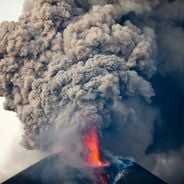
The volcano's most powerful eruption happened in 1835, when ash reached as far as Mexico City. This event reshaped the coastline of the Gulf of Fonseca by creating new islands in the water.
The name Cosigüina is of unknown meaning; linguist Daniel Garrison Brinton established in the late 19th century that it likely comes from Lenca or Matagalpa, Chibcha-family languages whose endings such as "-güina" also appear in Yalagüina and Palacagüina. The volcano was also called "Lacoalguina".
Cosigüina lies in the municipality of El Viejo, Chinandega department, within a reserve and wildlife refuge managed by MARENA, on the peninsula facing the Gulf of Fonseca. The summit cone reaches 872 m and holds a crater lake, Laguna Cosigüina, 1.5 km² in extent. A hot spring sits on the eastern flank, and gas bubbles are sometimes seen in the lake.
The 1835 eruption lowered average land temperatures worldwide by about 0.75 °C, according to an analysis by Berkeley Earth Surface Temperature. Ash from that blast has been found as far away as Mexico, Costa Rica and Jamaica. The only signs of hydrothermal activity today are intermittent gas bubbles in the crater lake and a hot spring on the eastern flank.
The community of curious travelers
AroundUs brings together thousands of curated places, local tips, and hidden gems, enriched daily by 94,404 contributors worldwide.