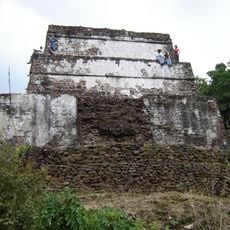
El Tepozteco, Archaeological site in Tepoztlán, Mexico.
El Tepozteco is a small temple to Tepoztēcatl, the god of pulque, on a peak of the Sierra de Tepoztlán above the town. At the western side stands a 6.4-metre platform carrying a 3.3-metre temple base, with the temple walls now 2.7 metres high. Two rooms remain: the outer one with two pillars at its entrance, the inner sanctum also flanked by pillars, where the god's sculpture was probably kept.
The temple was built in the Middle Postclassic Period, between 1151 and 1351 AD, on a peak of the Sierra de Tepoztlán. It was modified several times: first the entrance to the inner sanctum was narrowed, then stone benches and a projecting cornice with bas-reliefs of the 20 day glyphs of the tonalpohualli were added. Two fallen stones bear the name of the Aztec emperor Ahuizotl and the date "10 rabbit" (1502 AD), the year he died; some archaeologists link them to the temple's construction, others to a later commemoration. The Triple Alliance conquered Tepoztlán in 1452, and the benches may have been built after that.
The temple honours Tepoztēcatl, the Aztec god of pulque, a fermented drink made from the maguey plant; his cult was local to this site. Each 21 March visitors come to the pyramid, and on 7 and 8 September an offering is made to Ometochtli with a theatrical performance in Nahuatl. The idol called Two Rabbit, found here, was destroyed by friars during evangelisation.
The climb follows steep stone steps through forested terrain and takes between one and two hours depending on your pace. Comfortable shoes and plenty of water are important, as the path can be slippery and steep in places.
Stone carvings inside the chambers show a mix of straight and angled surfaces that are typical of late building styles in the region. On clear days, the view from the summit reaches as far as the volcanoes Popocatépetl and Iztaccíhuatl.
The community of curious travelers
AroundUs brings together thousands of curated places, local tips, and hidden gems, enriched daily by 94,072 contributors worldwide.