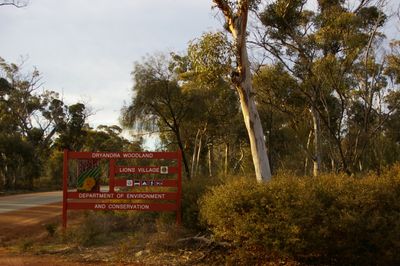
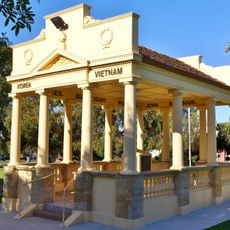
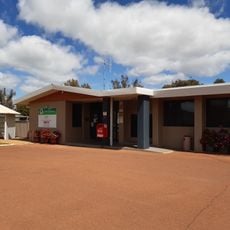
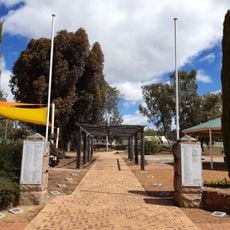
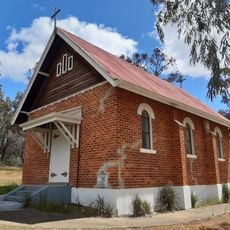
Dryandra Woodland National Park, Nature reserve in Wheatbelt region, Australia.
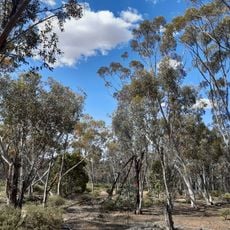
Dryandra Woodland National Park is a complex of 17 separate blocks managed by Western Australia's Department of Biodiversity, Conservation and Attractions, spread over about 50 kilometres and totalling 28,066 hectares, from 87 to 12,283 hectares per block. It lies on the Yilgarn craton's undulating laterite-capped plateau, 164 kilometres south-east of Perth and 22 kilometres north-west of Narrogin. Its transitional flora is known for stands of wandoo, powderbark wandoo and salmon white gum, with jarrah and marri as top cover.
Dryandra Woodland was declared a national park on 17 January 2022. In the early 1900s, an industry grew up in the forest and surrounding district harvesting bark from brown mallet trees (Eucalyptus astringens), a eucalypt of laterite soils in the southern wheatbelt. Part of the woodland is listed on the Register of the National Estate.
The woodland has strong cultural links for the Noongar people, though the sources name no specific group, place name or ochre sites. Its name comes from the shrub genus Dryandra, now classed within Banksia, which grows in the understorey; golden dryandra (Banksia nobilis) and prickly dryandra (B. armata) are among the species a visitor can look for.
The woodland lies about 164 km south-east of Perth and 22 km north-west of Narrogin, on the western edge of the Wheatbelt. Its 17 blocks are separated by farmland, with some uncleared road reserves and replanted corridors linking them. The climate is semi-arid Mediterranean, with seven to eight dry months a year and about 500 mm of annual rainfall.
Within the reserve sits Barna Mia, a predator-proof sanctuary where you can observe nocturnal animals like numbats and woylies in a protected setting. This specialized area gives endangered species a place to thrive and demonstrates modern conservation techniques.
The community of curious travelers
AroundUs brings together thousands of curated places, local tips, and hidden gems, enriched daily by 93,804 contributors worldwide.