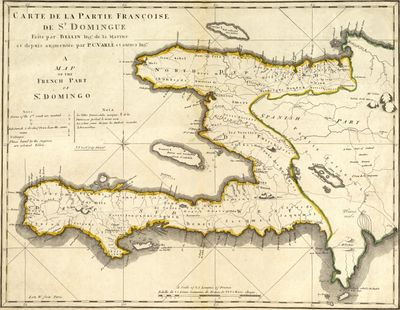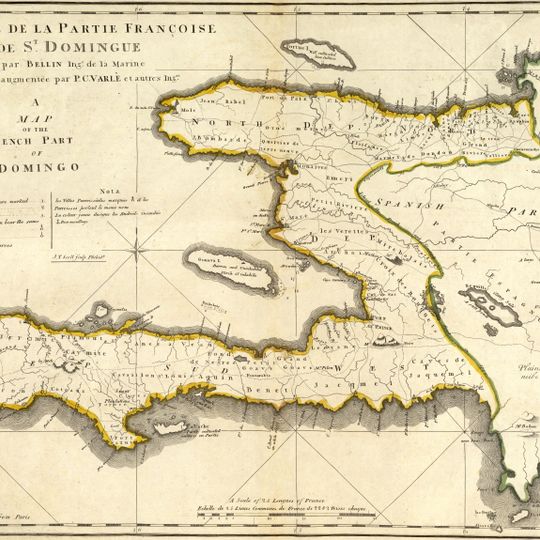
Saint-Domingue, French colony in western Hispaniola, Caribbean
Saint-Domingue was a French colony in the western part of Hispaniola in the Caribbean. The territory included coastal plains, mountain regions, and valleys where sugar, coffee, and cotton were grown.
France established control over the western half of Hispaniola in the late 17th century. The colony came to an end in 1804 when Haiti gained independence after a decade-long armed conflict.
People created a Creole language and religious practices that brought together African and French traditions in response to plantation life. These cultural forms emerged from daily interactions across different communities and continue to shape Haiti today.
The territory corresponds to present-day Haiti on the western side of Hispaniola. Travelers find traces of the colonial past today in fortress ruins and plantation remains along coasts and inland areas.
The colony produced more sugar and coffee than all British Caribbean possessions combined. Its wealth made it the most valuable overseas colony in the Atlantic world at the time.
The community of curious travelers
AroundUs brings together thousands of curated places, local tips, and hidden gems, enriched daily by 92,321 contributors worldwide.