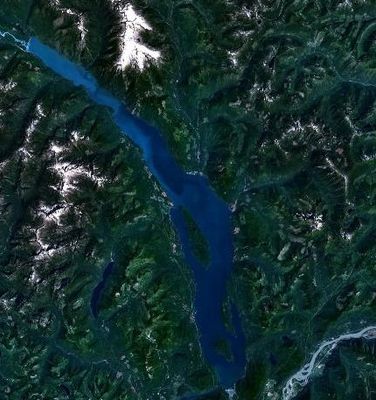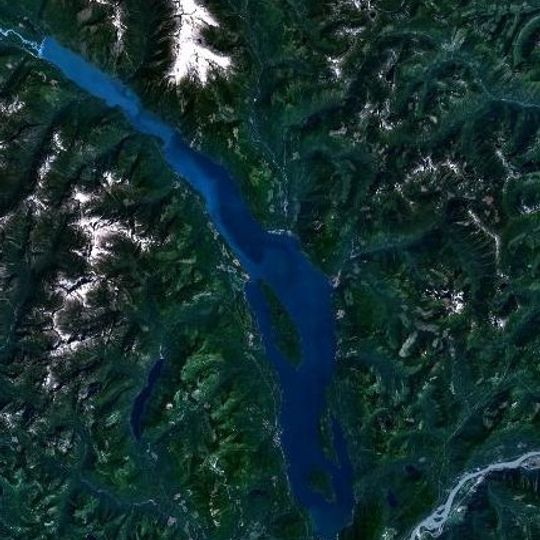
Harrison Lake, lake in British Columbia, Canada
Harrison Lake is a large body of water in the southern Coast Mountains of British Columbia, fed mainly by the Lillooet River. The water stretches for many kilometers and is surrounded by forested hills, quiet coves, and snow-capped mountains, with its dark, cold surface reflecting its glacier-fed origins.
The lake played a key role on the Douglas Road, a route that guided gold prospectors to the goldfields during the 1850s gold rush. Its connection to the Fraser River through the Harrison River made it an important transportation route during early European settlement.
The lake's name comes from early European explorers in the region. Today, visitors and locals use it for water activities and relaxation, showing how central this body of water is to life in the area.
The lake is easily accessible by road and has several boat ramps for water enthusiasts. Visitors should know that the water is very cold and conditions can change quickly, so it is important to check the weather forecast and wear proper safety gear like life jackets.
Several natural hot springs lie along the shores of this otherwise cold lake, creating a striking contrast. These underground warm waters have drawn visitors for centuries and offer a unique experience of warmth nestled within the frigid mountain water.
The community of curious travelers
AroundUs brings together thousands of curated places, local tips, and hidden gems, enriched daily by 92,655 contributors worldwide.