Hagerman Fossil Beds National Monument, Paleontological site at Snake River Valley, Idaho, United States.
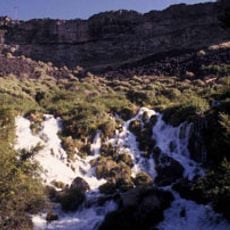
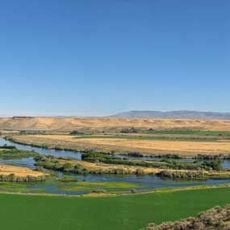
Hagerman Fossil Beds National Monument protects a 4,351-acre Pliocene site on the west bank of the Snake River in southern Idaho. Its up to 200-metre river terrace holds fossils of at least 200 species, including the Hagerman horse, Equus simplicidens, camels, and the oldest New World river otter, Lontra weiri.
The first excavations took place in 1929, conducted by the Smithsonian Institution after a local rancher alerted scientists to finds on his land. The fossil beds, including the Smithsonian Horse Quarry, were designated a National Natural Landmark in 1975 and reclassified as a National Monument in 1988. The monument protects deposits from the Blancan North American Land Mammal Age, dating from 3.07 million to at least 4 million years ago.
Scientists from many places study the fossils here to understand how animals evolved in North America over millions of years. The research conducted at this site has helped piece together the story of life across the continent.
The Thousand Springs Visitor Center roughly 1 mile north of Hagerman on US Highway 30 displays fossils and offers ranger-led programs. Visitors should wear sturdy shoes since the terrain is uneven and can be challenging to walk on.
The site holds the largest collection of Equus simplicidens fossils anywhere, an extinct horse species that lived roughly three to four million years ago. This concentration allows researchers to study in detail how these early horses developed and changed over time.
The community of curious travelers
AroundUs brings together thousands of curated places, local tips, and hidden gems, enriched daily by 93,763 contributors worldwide.