Labrador Trough, Geological formation in Quebec, Canada.
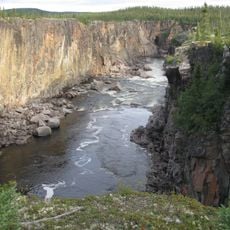
The Labrador Trough is a geological formation extending roughly 1600 kilometers from Ungava Bay through Quebec, composed of sedimentary and volcanic rock layers. These rocks formed during the Early Proterozoic and contain significant iron ore deposits that remain visible in the landscape today.
Exploration of the region in the 1860s identified iron-bearing rocks in the northern Gulf of St. Lawrence area. Mining operations began decades later, developing into a major industry focused on extracting iron ore from the extensive banded iron formations.
The formation reveals the geological development of North America through its rock layers, mineral deposits, and structural patterns spanning billions of years.
The area is remote and difficult to access, located in northern Quebec with sparse population and limited facilities. Visitors should prepare for harsh weather conditions, particularly during colder months when snow and ice are common.
The formation contains rock layers dated between 2.17 and 1.87 billion years old, making them among North America's oldest geological materials. These extremely ancient rocks provide insight into Earth's early development and how the continent took shape.
The community of curious travelers
AroundUs brings together thousands of curated places, local tips, and hidden gems, enriched daily by 92,705 contributors worldwide.