Fernie Formation, Shale formation in British Columbia, Canada.
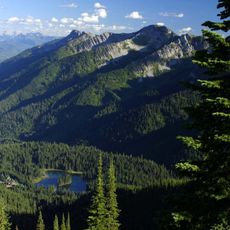
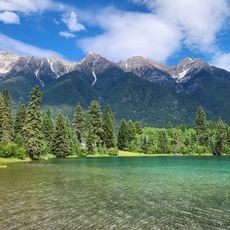
The Fernie Formation is a shale deposit in the mountainous regions of eastern British Columbia. It consists of dark gray layers of shale that spread across a broad area with distinct sedimentary bands visible in exposed sections.
The Fernie Formation is Jurassic in age, not Devonian. W.W. Leach first defined it in 1914, naming it after the town of Fernie, British Columbia. Its marine sediments were deposited in the Sundance Sea from the Hettangian stage until the mid-Tithonian, as shown by ammonites, molluscs and microfossils.
The formation's name comes from the town of Fernie, British Columbia, and it was first defined by W.W. Leach in 1914. Its ammonites, molluscs and microfossils are what let geologists date the beds from the Hettangian to the mid-Tithonian. Outcrops in the Kootenay region and the foothills of the Canadian Rockies are where the unit can be examined.
Access to this formation is found in remote mountain areas that require careful planning and suitable equipment. Visitors should be prepared for challenging terrain and variable mountain weather conditions.
The formation is named after the town of Fernie, British Columbia, and was first defined by W.W. Leach in 1914. Its age was established from fossil assemblages of ammonites, molluscs and microfossils, which place deposition from the Hettangian to the mid-Tithonian.
The community of curious travelers
AroundUs brings together thousands of curated places, local tips, and hidden gems, enriched daily by 93,780 contributors worldwide.