Eumeralla Formation, Geological formation in Victoria, Australia
The Eumeralla Formation is a geological formation in the Otway Basin of Victoria, Australia, up to 3,000 metres thick and made of sandstone, siltstone and claystone. It was defined in 1971 and named after the Eumeralla River. Its fluvial siliciclastic beds, derived from volcanic material, were folded by northwest–southeast compression during the Neogene.
This rock layer formed around 125 million years ago when Australia was in the early stages of separating from Antarctica. Sediments settled in river basins during this slow continental shift, building up the layers we find today.
The formation is named after the Eumeralla River and was defined in 1971. Its dinosaur fossils come mainly from the Dinosaur Cove locality, and with the Griman Creek Formation it is among Australia's richest deposits of named Mesozoic dinosaur taxa, including Leaellynasaura amicagraphica and Diluvicursor pickeringi.
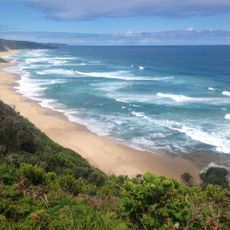
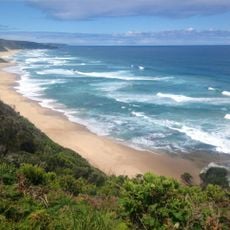
The formation is buried underground and is not accessible to visitors, as it is studied mainly through scientific drilling and excavation. Travelers in the region can still explore the landscape above it, which has been shaped by the same deep geological forces.
Bones and footprints of dinosaurs have been found within these rock layers, which is unusual given how rare such finds are across Australia. These discoveries give researchers a clearer picture of what life looked like in this part of the world during the Early Cretaceous.
The community of curious travelers
AroundUs brings together thousands of curated places, local tips, and hidden gems, enriched daily by 94,130 contributors worldwide.