Ledra Street, shopping thoroughfare in Nicosia, Cyprus
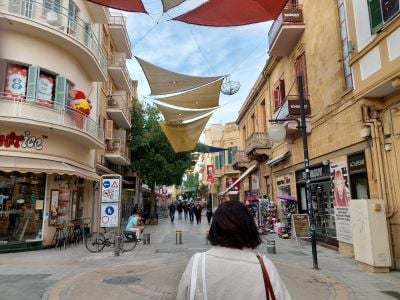
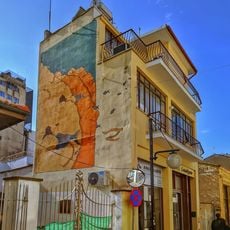
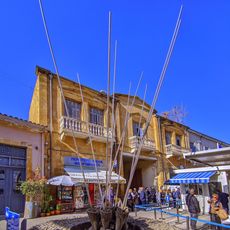
Ledra Street is a pedestrian shopping street about 1 km long in central Nicosia, running south to north from Eleftheria Square. Its southern part is lined with multi-storey sand, beige and grey stone buildings with green shutters, balconies and shopfronts; a yellowish line runs along the pale grey slab paving. At its northern end the street meets the UN buffer zone and a pedestrian crossing to North Nicosia.
Ledra Street takes its name from the ancient city-kingdom of Ledra, founded in 1050 BC on the site of today's Nicosia. During the EOKA campaign of 1955–1959 it was nicknamed "Murder Mile" for attacks on British soldiers. In 1963 it was sealed with barbed wire and later cut by the UN buffer zone; the crossing reopened on 3 April 2008 after 34 years.
The street's name comes from the ancient city-kingdom of Ledra, founded in 1050 BC at the island's centre. Since April 2008 its northern end has been a pedestrian crossing into the Turkish-controlled part of Nicosia, and the street is now used mainly by tourists and strollers rather than by Cypriots, who prefer to cross by car at other checkpoints.
The crossing at the northern end is treated as an entry point by the Turkish Cypriot side: visitors show a passport or EU/Turkish ID, the number is registered and a 90-day stamp is issued for passports. The Republic of Cyprus runs no regular checks there, only a small police post in a former shop from which customs officers make spot checks on shopping bags. The street runs about 1 km from Eleftheria Square south to north.
The crossing reopened on 3 April 2008 at 9 a.m., ending 34 years of closure; the mayors of the two sides, Eleni Mavrou and Cemal Metin Bulutoğluları, walked through the UN buffer zone together. That evening Cypriot police briefly shut it again after Turkish soldiers in uniform crossed, and it reopened within hours.
The community of curious travelers
AroundUs brings together thousands of curated places, local tips, and hidden gems, enriched daily by 94,957 contributors worldwide.