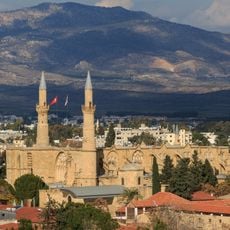
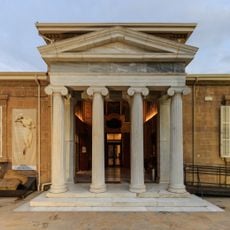
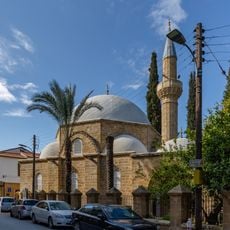
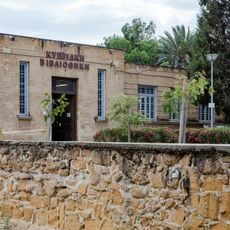
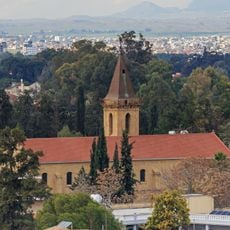
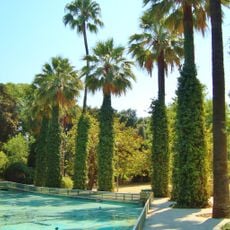
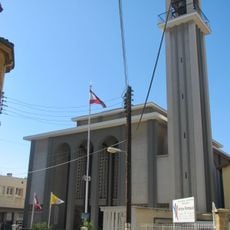
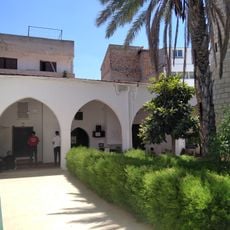
Notre Dame de Tyre, Gothic church in Arab Ahmet quarter, Nicosia, Cyprus.
Notre Dame de Tyre is an Armenian church featuring a square nave with high cross vaults and a semi-octagonal apse. A bell tower was added in 1860 and became a defining element of its appearance.
The church was built in 1116 by Baldwin de Buillon, King of Jerusalem. After the 1303 earthquake it was rebuilt between 1308 and 1310 by King Henry II. Nuns of Armenian origin brought it under the Armenian Church between 1491 and 1504, and in 1570 Sultan Selim II granted it to the Armenians after the Ottoman conquest of Nicosia.
The church is dedicated to the Virgin Mary, called "Our Lady of Tyre" after the Crusader see, and its Armenian name is Surp Asdvadzadzin. The Armenian community took over the building between 1491 and 1504 because many nuns were Armenian. In 1570 Sultan Selim II granted it to the Armenians along with the keeping of the Paphos Gate.
The church underwent extensive renovation from 2007 to 2013 and received the Europa Nostra Award in 2015. The building is open to visitors, though it is wise to check local visiting hours and respect any religious services taking place.
Inside the church compound stands a monument to the Armenian genocide erected in 1932, described as the second oldest of its kind in the world. The Melikian primary school was built on the church grounds in 1920 by descendants of Artin Melikian, and the Ouzounian school followed in 1938.
The community of curious travelers
AroundUs brings together thousands of curated places, local tips, and hidden gems, enriched daily by 92,787 contributors worldwide.