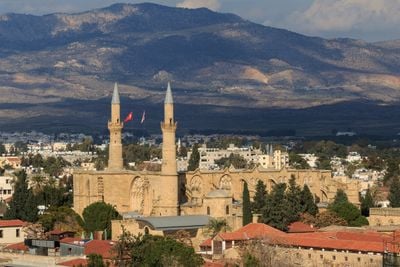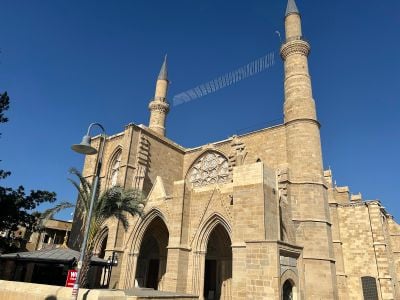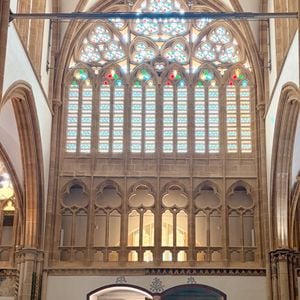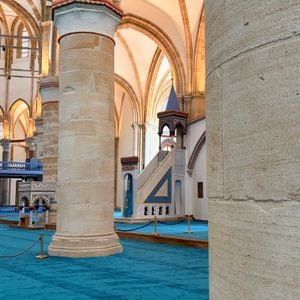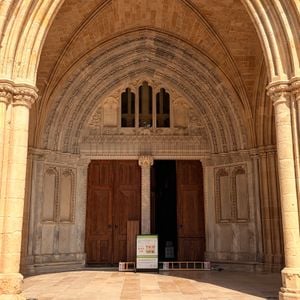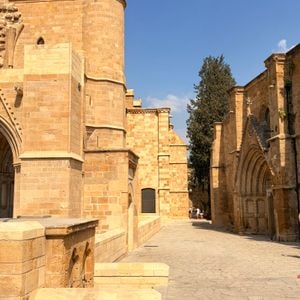
Saint Sophia Cathedral, Gothic mosque in northern Nicosia, Cyprus.
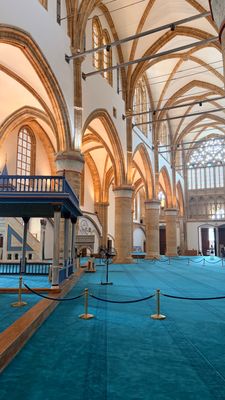
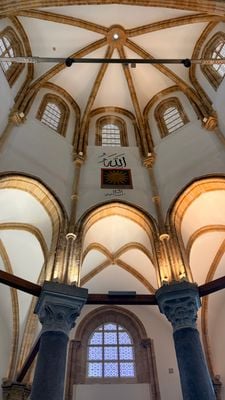
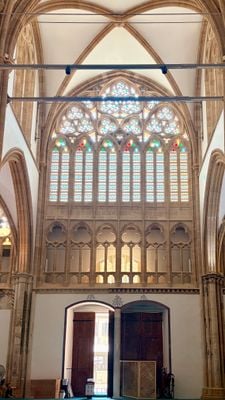
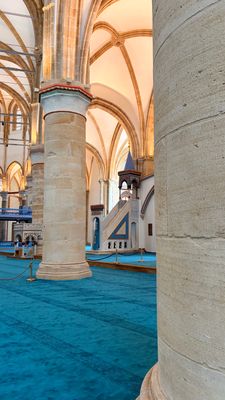
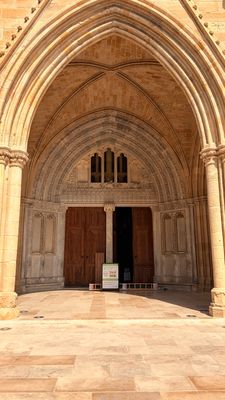
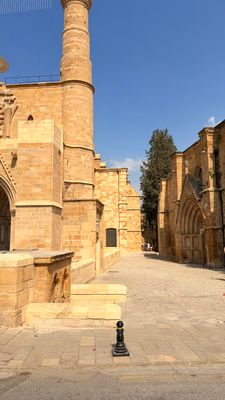
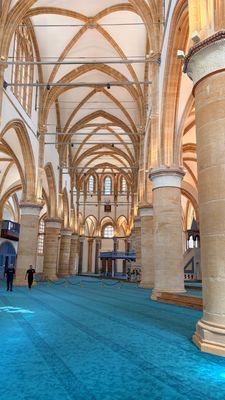
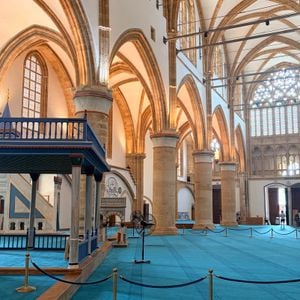
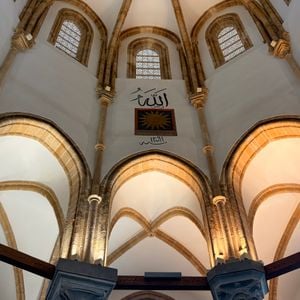
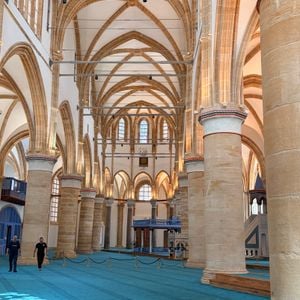
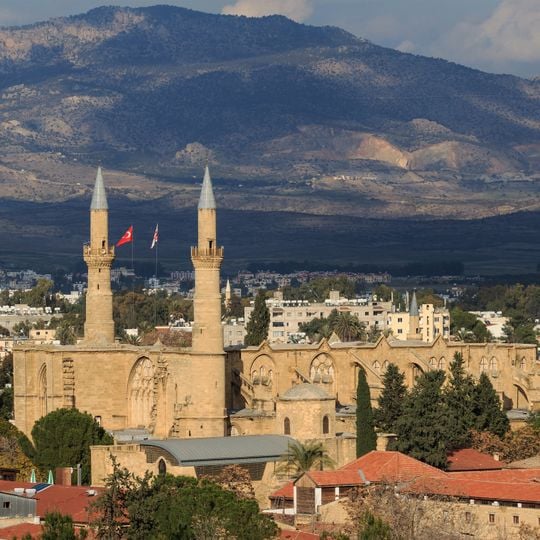
Saint Sophia Cathedral is a rectangular building of pale tan ashlar stone, its facade fronted by a deep porch of pointed Gothic arches on clustered columns. Two slender cylindrical minarets with balconies and conical caps rise at either end of the facade. Behind the arcade are tall pointed-arch windows and a recessed central portal; the interior measures 66 by 21 metres, with clustered columns carrying pointed arches and vaulting.
Construction began in 1209 as a Roman Catholic cathedral and continued for 150 years until the dedication in 1326. The building was later converted into a mosque, reflecting the island's complex religious history.
The cathedral was the coronation church of the Lusignan kings of Cyprus; after the Genoese took Famagusta it also served for their coronation as kings of Jerusalem, and later of Armenia. In 1310 the Trials of the Knights Templar were held inside it. The name comes from Hagia Sophia, "Holy Wisdom" in Greek, kept from the earlier Byzantine church on the site.
The interior accommodates roughly 2500 worshippers and welcomes visitors outside the five daily prayer times. Plan your visit during afternoon or evening hours to explore freely without interruption.
The 1491 earthquake toppled much of the choir and damaged a tomb said to belong to Hugh III of Cyprus; the body was found intact in royal clothing with golden relics, which the Venetians took. The Venetian Senate then ordered repairs, funded by an annual 250-ducat levy on the archbishop.
The community of curious travelers
AroundUs brings together thousands of curated places, local tips, and hidden gems, enriched daily by 92,787 contributors worldwide.