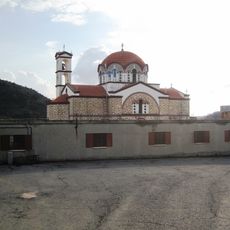
Khirokitia, Archaeological site in Larnaca District, Cyprus
Khirokitia is a Neolithic settlement on the west bank of the Maroni River, about 6 km from the sea. Its round stone-and-mudbrick houses, called tholoi, measure 2 to 9 m in diameter and cluster around open courtyards. A 2.5 m thick stone wall with several entry points protected the village on its unfortified west side.
The settlement was established around 7000 BCE and abandoned by 6000 BCE, representing early human migration from the Near East to the Mediterranean region. This period marks one of the earliest known permanent settlements in the area.
The name Khirokitia likely derives from "khiros" (pig) and "kiti," suggesting a pig-raising area; other theories link it to palmistry ("khirogetia") or "Ierokitida" (sacred place). Burials took place in pits dug inside houses, the dead laid crouched on their right side, with the degree of contraction depending on age. Grave goods varied by sex, often including broken stone vessels, and a stone placed on the body was thought to prevent the dead from returning.
Guided tours and information panels are available at the site to help visitors understand the settlement. The location is easily accessible by regular intercity buses connecting Limassol, Larnaca, and Nicosia.
No pottery remains were found at the site, indicating the settlement is older than pottery technology itself. This discovery makes the location valuable for understanding early human development before the invention of ceramics.
The community of curious travelers
AroundUs brings together thousands of curated places, local tips, and hidden gems, enriched daily by 93,733 contributors worldwide.