Guinea-Bissau, Country in West Africa.
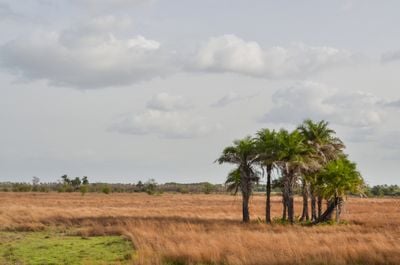
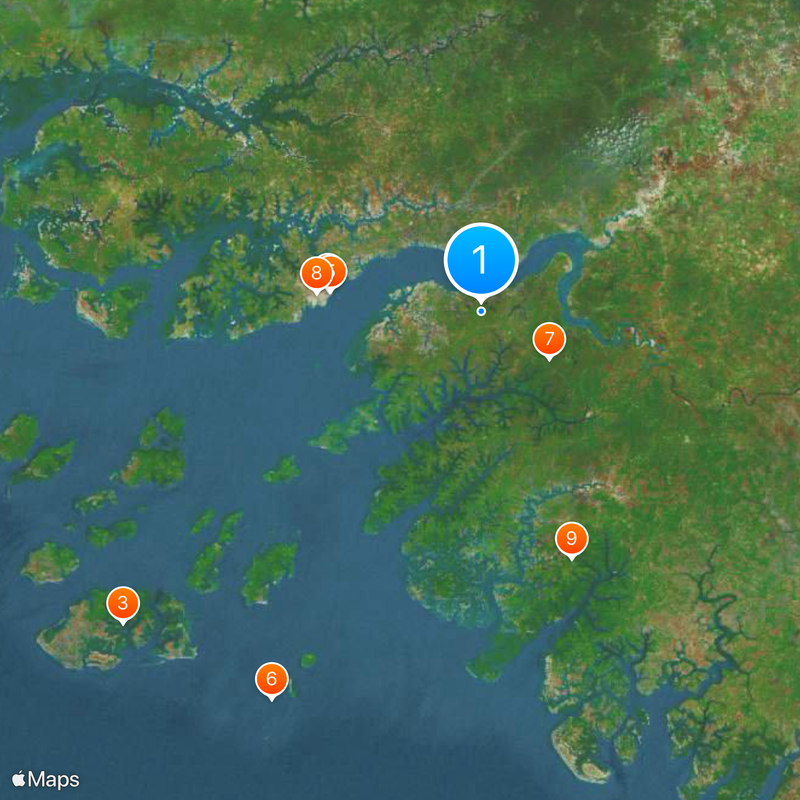
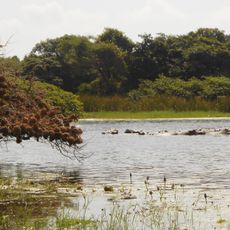
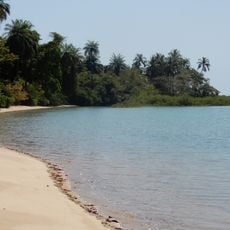
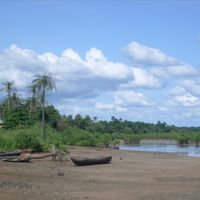
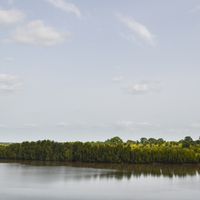
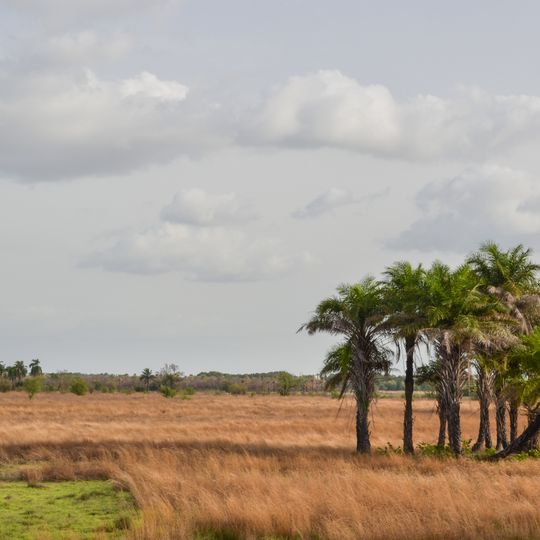
The territory between Senegal and Guinea covers 36,125 square kilometers of coastal landscape with extensive mangrove forests along river estuaries and numerous offshore islands. The geographic position on the Atlantic shapes a humid tropical climate with pronounced wet and dry seasons. Flat coastal plains transition inland to low plateaus. Vegetation ranges from dense mangrove zones to savanna areas in the east.
Portuguese traders established trading posts along the coast from the 15th century onwards. The African Party for the Independence of Guinea and Cape Verde initiated armed resistance against colonial rule in 1963. After a decade of conflict, unilateral independence was declared in 1973, gaining international recognition following Portugal's Carnation Revolution in 1974. Political instability marked subsequent decades with several military coups.
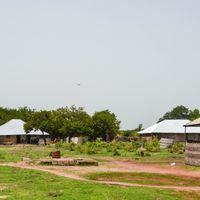
The nation shapes a society of over 20 ethnic communities whose traditional organizational forms and religious practices structure daily life. Local markets serve as central meeting points for trade and social exchange. Musical and dance forms, especially gumbe, reflect the population's cultural diversity and historical experiences. Family ties and collective decision-making remain important social foundations.
Bissau serves as the main gateway with an international airport and port facilities. The dry season from November through May offers more favorable travel conditions than the wet period. Yellow fever vaccination is mandatory for entry. The local currency CFA franc is widely used. Basic infrastructure exists primarily in urban centers, while rural areas have limited service facilities. French language skills facilitate communication alongside widely spoken Creole.
The Bijagos Archipelago's 88 islands host matrilineal societies where women traditionally hold significant decision-making authority over land and resource management. Island inhabitants practice distinct initiation rites and maintain animist beliefs that differ from mainland traditions. Some islands remain difficult to access for outsiders, preserving cultural continuity across generations.
Inception: 1974
Capital city: Bissau
Part of: West Africa, Portuguese-speaking African countries
Shares border with: Guinea, Senegal
Website: https://gov.gw
GPS coordinates: 11.81522,-15.23510
Latest update: November 30, 2025 19:04
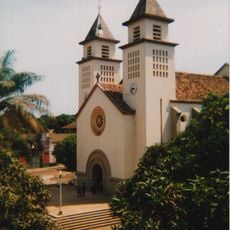
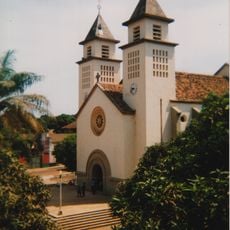
The Cathedral of Bissau
38 km
Orango Islands National Park
117.9 km
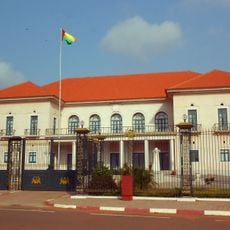
Presidential Palace, Bissau
38.5 km
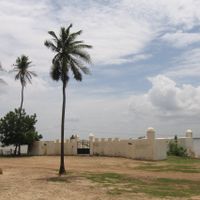
Fortaleza de São José da Amura
37.8 km
National Library of Guinea-Bissau
41.1 km
Cacheu Mangroves Natural Park
116.1 km
Memorial da Escravatura e do Tráfico Negreiro
113.7 km
Our Lady of Grace Cathedral, Bafatá
73.8 km
Forte de Cacheu
113.8 km
Museu Etnográfico Nacional da Guiné-Bissau
41.2 km
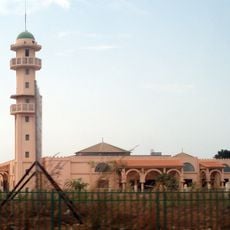
Mesquita de Attadamun
41.7 km
Palácio Colinas de Boé
39 km
Paços do Concelho de Bolama
37.4 km
Igreja de São José de Bolama
37.4 km
Museu Militar da Luta de Libertação Nacional
37.8 km
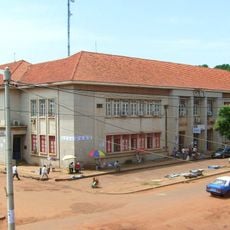
Central post Bissau
38.1 km
Bissau Cathedral Light
38 km
Cine UDIB
38.3 km
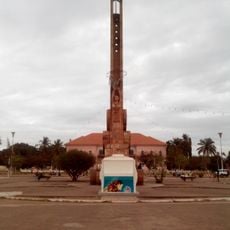
Monumento aos Heróis da Independência
38.4 km
Amílcar Cabral
73.4 km
Monumento aos Aviadores Italianos
36.9 km
Centre culturel franco-bissau-guinéen
38.2 km
Praia de Ofir
38.7 km
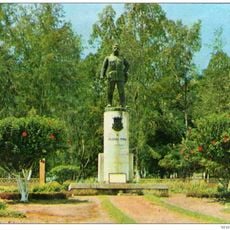
Monumento a Teixeira Pinto (Bissau)
39 km
Birth house of Amílcar Cabral
73.6 km
Osvaldo Vieira
45.8 km
Igreja de Geba
64.2 km
Hospital Militar e Civil de Bolama
37.5 kmReviews
Visited this place? Tap the stars to rate it and share your experience / photos with the community! Try now! You can cancel it anytime.
Discover hidden gems everywhere you go!
From secret cafés to breathtaking viewpoints, skip the crowded tourist spots and find places that match your style. Our app makes it easy with voice search, smart filtering, route optimization, and insider tips from travelers worldwide. Download now for the complete mobile experience.
A unique approach to discovering new places❞
— Le Figaro
All the places worth exploring❞
— France Info
A tailor-made excursion in just a few clicks❞
— 20 Minutes