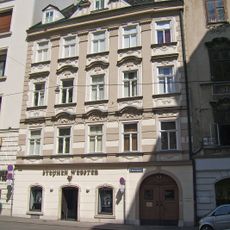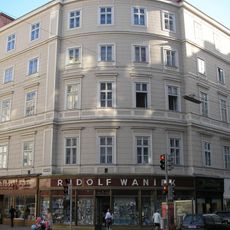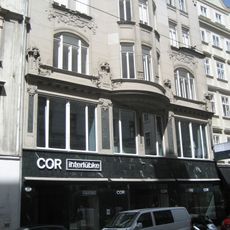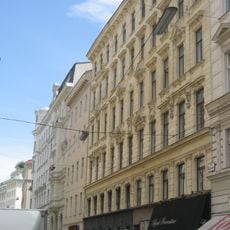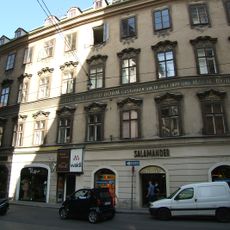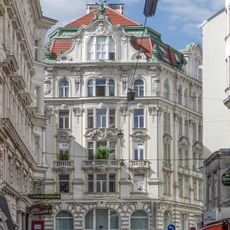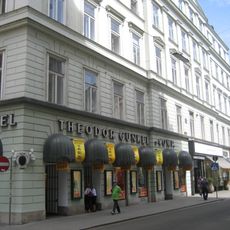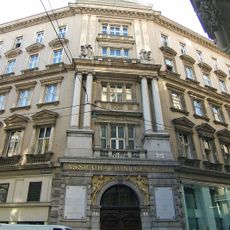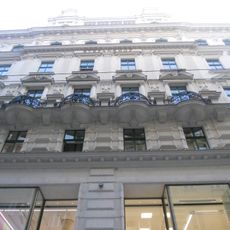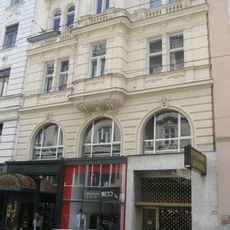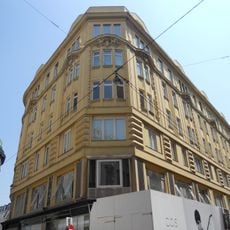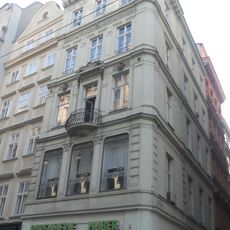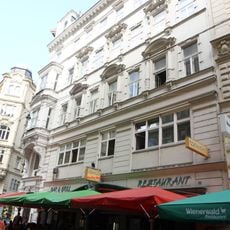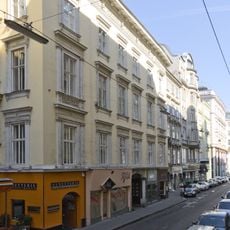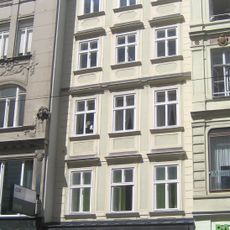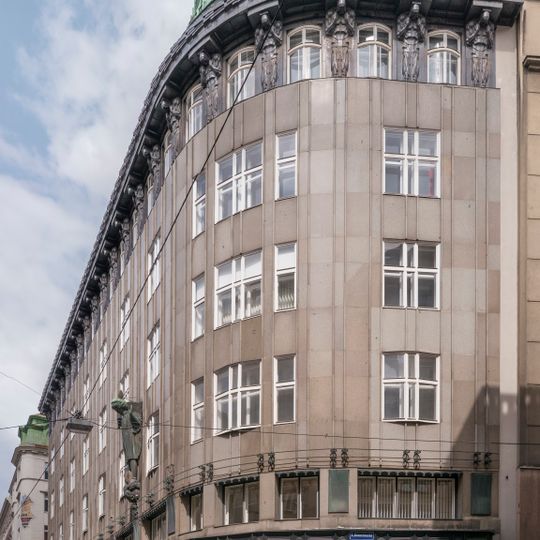
Zacherlhaus, Art Nouveau residential building in Innere Stadt, Austria.
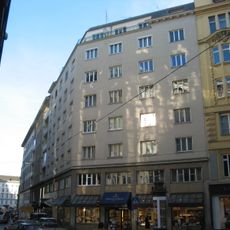
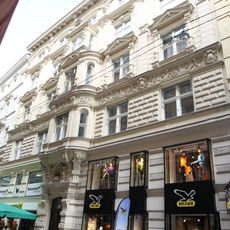
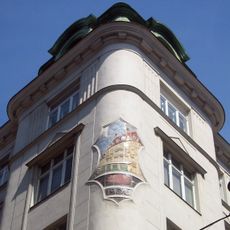
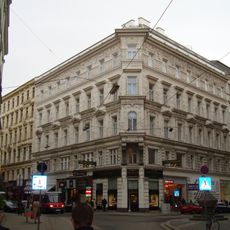
The Zacherlhaus is a residential and commercial building designed by Jože Plečnik and built from 1903 to 1905 at Brandstätte 6, Wildpretmarkt 2–4 and Bauernmarkt 5 in Vienna's Innere Stadt. Its facade is clad in polished grey granite plates, with a projecting cornice and an Archangel Michael figure by Ferdinand Andri; the atlantes are by Franz Metzner.
The structure was built between 1903 and 1905 and commissioned by entrepreneur Johann Evangelist Zacherl, whose family gained wealth through insecticide manufacturing. This period marked an intense phase of architectural innovation in Vienna when modern designs were reshaping the city.
The building takes its name from its original patron and displays the distinctive design language of the Otto Wagner school, which reshaped Vienna's appearance around 1900. The mixture of residential and office space reflects how the use of buildings evolved during this period.
The building sits in a busy central area that is easily accessible on foot and surrounded by other points of interest. Since it functions as an active residential and office building today, interior access may be limited, but the impressive facade and sculptures are fully visible from the street.
The oval stairwell's insect-shaped lamp echoes the Archangel Michael on the facade: Michael defeats impure spirits, and the Zacherl family fortune came from insecticide powder. Johann Evangelist Zacherl, son of the Zacherlfabrik's founder, commissioned the building, nicknamed Wanzenburg (bug castle) after the product.
The community of curious travelers
AroundUs brings together thousands of curated places, local tips, and hidden gems, enriched daily by 93,898 contributors worldwide.