Styrian Armoury, Military museum in Innere Stadt, Graz, Austria
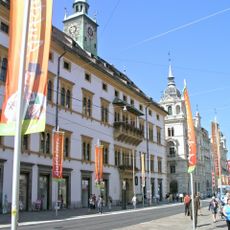
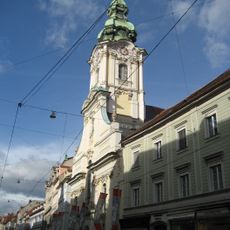
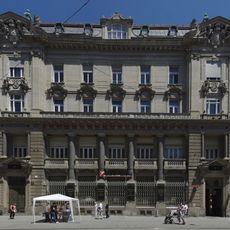
The Styrian Armoury (Landeszeughaus) is a museum in Graz's Innere Stadt, housed in a building erected from 1642 to 1647 to plans by Antonio Solari in early Baroque style. It has five stacked floors, measures 52.5 m long and 11.5 m wide, and holds about 32,000 original weapons and armour pieces, including 3,840 protective pieces and 4,259 pistols.
The building was constructed between 1642 and 1644 to serve as an arms depot for the southeastern frontier of the Habsburg Empire. The collection it housed was kept largely intact over the following centuries, even as the region went through major political and military changes.
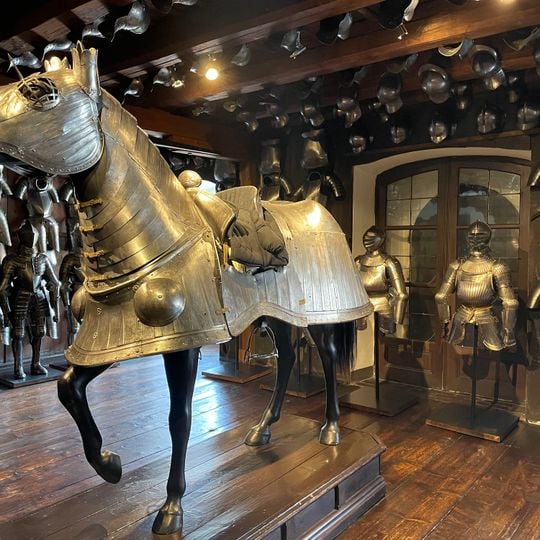
The armoury's name comes from the German Landeszeughaus, meaning the provincial arsenal of Styria. Its showpieces include the cuirass made by Conrad Richter in Augsburg around 1565 for Archduke Charles II of Inner Austria, and a horse armour made around 1510 by Konrad Seusenhofer in Innsbruck with etching by Daniel Hopfer of Augsburg. Officers' weapons from Innsbruck, Augsburg and Nuremberg workshops are often richly decorated.
The armoury stands at Herrengasse 16 in Graz's Inner City, a few steps from Hauptplatz. It is open six days a week and closed on Mondays throughout the year; in November it can only be visited on guided tours. The five floors are reached by stairs, and a lift installed in the 2013 renovation makes the building barrier-free.
During World War II, the entire collection was moved to three remote castles in Styria to protect it from damage. After the war, every single piece was brought back and returned to its original place in the building.
The community of curious travelers
AroundUs brings together thousands of curated places, local tips, and hidden gems, enriched daily by 93,356 contributors worldwide.