GK Dürnrohr, HVDC back-to-back station in Zwentendorf an der Donau, Austria
GK Dürnrohr is a conversion station in Zwentendorf an der Donau that transforms alternating current into direct current and reverses the process. The facility links different Austrian electrical grids together and allows power to flow between them as needed.
Planning began in 1975 after Austria and Poland signed a contract to exchange electricity over a line crossing Czechoslovakia. Construction started in late 1980, trial exchange with Czechoslovakia ran from June 1983, and official operation began on 1 September 1983. After the West and East European grids were synchronised on 17 October 1995, the station ran until 31 October 1996; the remaining parts were dismantled in 2007.
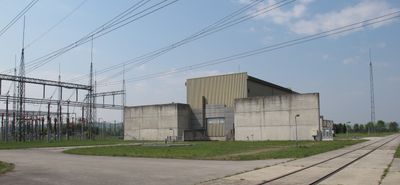
The name GK stands for Gleichstromkurzkupplung, a back-to-back direct-current coupling. The plant was built under a 1975 Austrian-Polish contract to exchange electricity over a line crossing Czechoslovakia, and from 1983 to 1996 it carried that exchange with Czechoslovakia. Its valve hall, now used by Verbund AG, still stands west of the Dürnrohr substation.
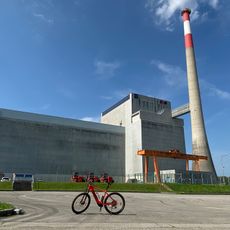
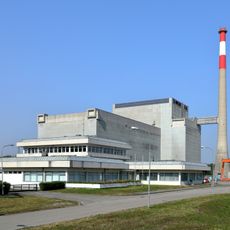
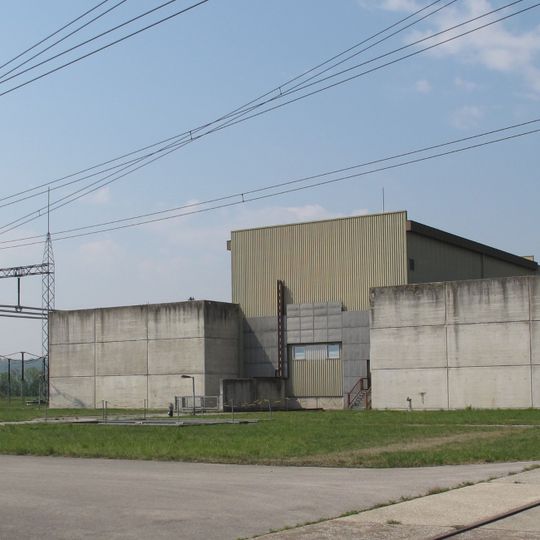
The station stands west of the Dürnrohr substation in Zwentendorf an der Donau. The valve hall survives and is used by the former operator Verbund AG for operational purposes; the remaining plant parts were dismantled in 2007. The site is not open to the public, so the hall and the Dürnrohr–Slavětice line can only be viewed from outside.
The 1,056 thyristors installed here had a 100 mm silicon wafer diameter and were the largest thyristors in the world when the station was built. The valve hall, a 29.8 m by 15.4 m reinforced concrete building clad in galvanised steel sheet, still stands and is used by Verbund AG.
The community of curious travelers
AroundUs brings together thousands of curated places, local tips, and hidden gems, enriched daily by 95,294 contributors worldwide.