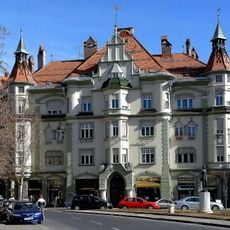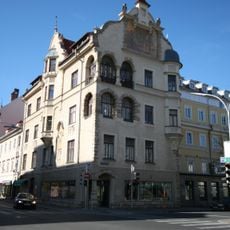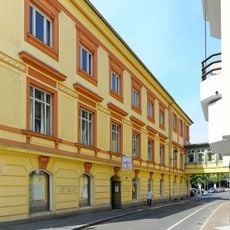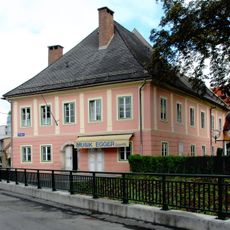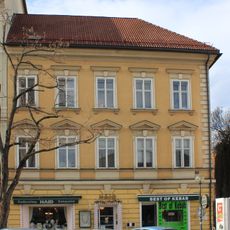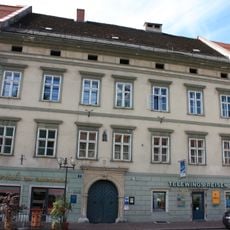
Stadtbefestigung Klagenfurt, Medieval city fortifications in Klagenfurt, Austria.
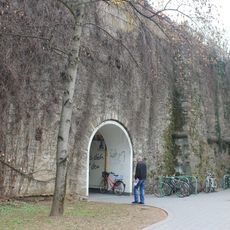
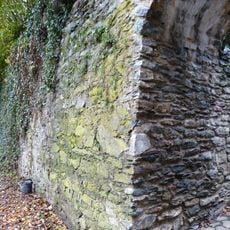
The Klagenfurt city fortifications ran slightly inside today's four ring roads (Villacher, Viktringer, Völkermarkter and St. Veiter Ring). The belt consisted of a rampart with a 15-metre-high battered rubble-stone wall topped by a ladder ridge, reinforced at corners and mid-sections by ear bastions. The four city gates stood beside casemate-equipped central bastions reached by broad ramps. Surviving remains include the Kardinalschütt with its eight-metre rampart, ramp and two posterns.
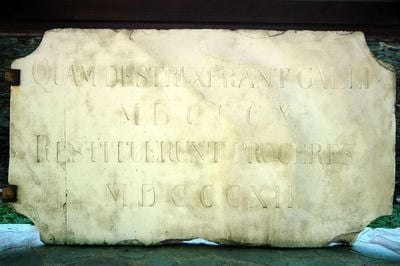
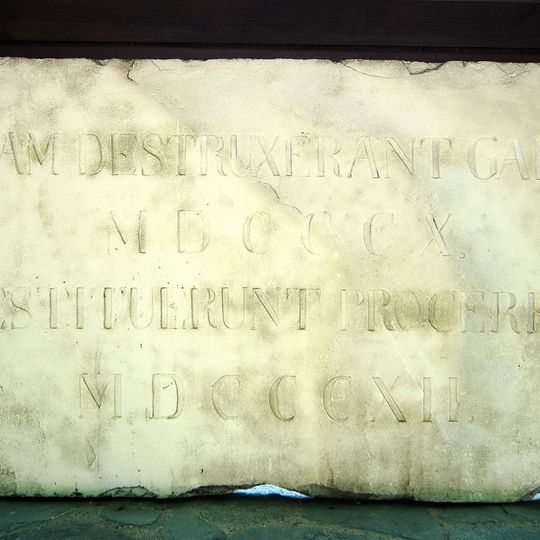
Construction began in 1534 under Italian fortress architect Domenico dell'Allio and was completed in 1591. Most of the structure was dismantled by Napoleon's forces in 1809, though one gate survived for several decades longer.
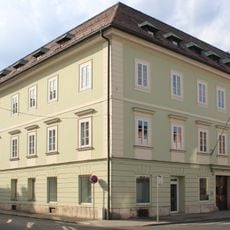
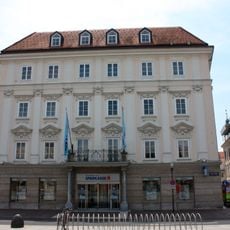
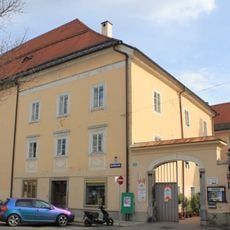
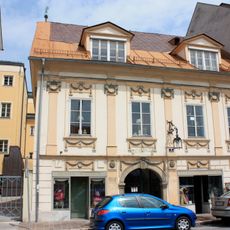
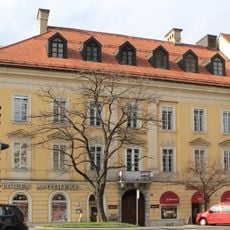
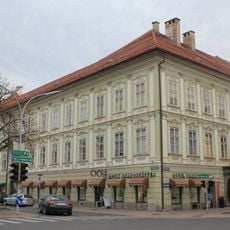
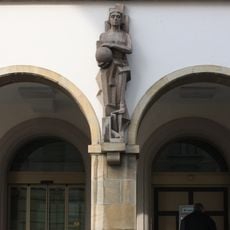
The four gates were named after the roads they served: St. Veiter Tor stood at today's Heuplatz, Völkermarkter Tor at Kardinalsplatz, Villacher Tor at Stauderplatz and St. Ruprechter Tor near today's Paulitschgasse. Lions that once adorned the gates now stand in front of houses at Heuplatz 18, Stauderplatz 3 and Getreidegasse 2.
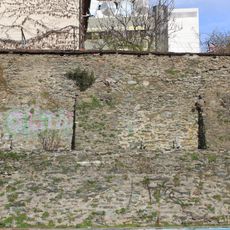
Remains survive at the Kardinalschütt, where an eight-metre rampart, the gate bastion's access ramp and two posterns with round-arched chlorite portals stand between houses no. 4 and 5. Wall fragments also survive at Stauderplatz 3 and on Villacher Ring between the Rothauer high-rise and the former Kolpinghaus. Lions that once adorned the gates now stand before Heuplatz 18, Stauderplatz 3 and Getreidegasse 2.
The Völkermarkter Gate was the only part of the fortress belt that Napoleon's troops spared when they blew up the fortifications in 1809/10. It stood until 1867, when it too was demolished. Its Carinthian coat of arms, held by two griffins, is now kept in the Lapidarium of the kärnten.museum.
The community of curious travelers
AroundUs brings together thousands of curated places, local tips, and hidden gems, enriched daily by 94,419 contributors worldwide.